The Rosh (הרא״ש) for Kids: Rabbeinu Asher, the Maharam's Talmid & Toledo
The Rosh, Rabbeinu Asher ben Yechiel, carried the Torah of Germany to Spain. Here is his story for children, the lesson, how to explain it at ages 3-4, 5-7 and 9-12, and questions for the Shabbos table.
Published by Torah Tale.
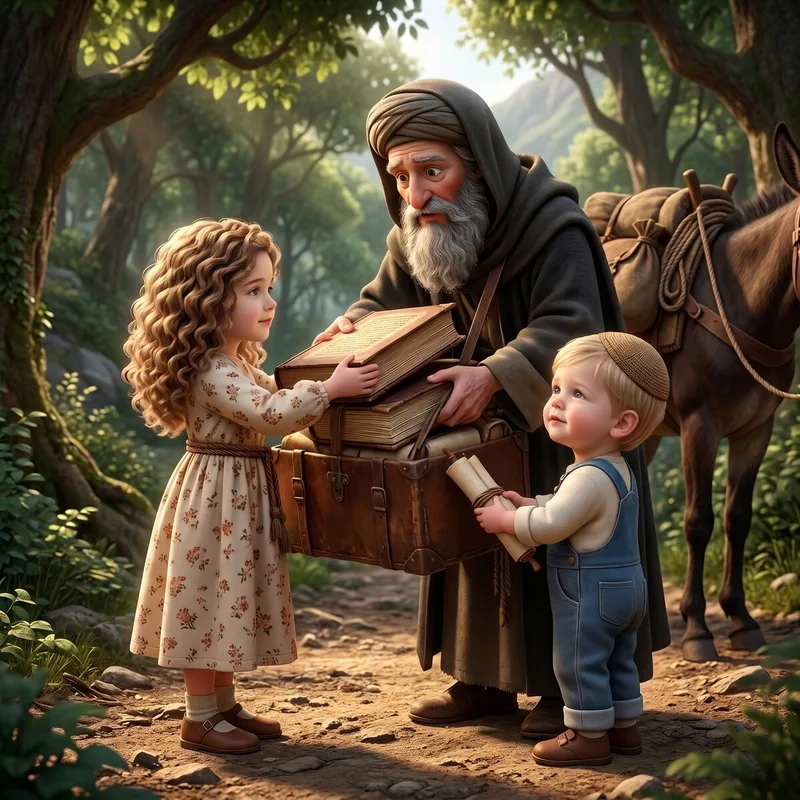
Create this book for your child
The Rosh (הרא״ש) is Rabbeinu Asher ben Yechiel, a Rishon who lived from about 1250 to 1327. He learned Torah in Germany from the Maharam of Rothenburg, and when Yidden there were in danger he left and became the rav of Toledo in Spain. Children connect to his story because it is about a talmid who loved his rebbi, had to leave home, and took the Torah with him wherever he went.
Who was the Rosh, and what does his name mean?
Rosh stands for Rabbeinu Asher. His full name is Rabbeinu Asher ben Yechiel, and in the beis medrash he is simply "the Rosh." He is counted among the Rishonim, the great Torah leaders of the centuries after the Geonim.
He was born in Germany and became a close talmid of the Maharam of Rothenburg, one of the great Torah leaders of Ashkenaz in his day. Everything the Rosh later taught was built on what he learned from his rebbi.
What is the story of the Rosh, in words a child can follow?
As it is recorded in the history of the Rishonim, the Maharam was put in prison by the king. The Yidden wanted to pay to free him, but the Maharam did not allow it. The account is that he did not want it to become a way for rulers to seize Torah leaders and demand money from Yidden. The Rosh lost his rebbi, but he did not stop learning or teaching.
Later, when it became dangerous for Yidden in Germany, the Rosh left. He made his way to Spain, where the community of Toledo accepted him as their rav. He brought the Torah of Germany with him and taught it there, and his talmidim learned from him in his new home.
In Toledo he wrote the Piskei HaRosh, a work that follows the order of the Gemara and states the halacha that comes out of each sugya. His son, Rabbi Yaakov ben Asher, wrote the Arba Turim, which later became the foundation for the Shulchan Aruch.
Why is the Rosh one of the three pillars of halacha?
Rav Yosef Karo explains in his introduction to the Beis Yosef that he ruled by the majority of three pillars: the Rif, the Rambam and the Rosh. When two of them agree, that is how he decided the halacha. This is one reason the Rosh is learned and quoted so often to this day.
For a child, this can be said simply: the Rosh worked so carefully that the Gemara's answers became easier for Yidden to find. If your child has already met the Rif or the Rambam, you can tell them the Rosh is the third pillar. His Piskei HaRosh also brings in the Tosafos of the Ba'alei HaTosafos, whom you can introduce through Rabbeinu Tam.
What is the lesson of the Rosh for children?
The Rosh's story gives parents several clear middos to talk about. We learn from it, and none of these is a quote of Chazal:
- Loyalty to a rebbi. The Rosh carried the Maharam's Torah forward after his rebbi was gone.
- Taking the Torah along. When life changes, such as moving or a new school, what we learned comes with us.
- Making things clear. The Rosh put his learning in order so that others could use it.
These fit children who are anxious about change. A child who is moving or starting somewhere new can hear that a great Rishon also began again in a new place and kept learning.
How do I explain the Rosh to a 4-year-old, a 7-year-old and a 10-year-old?
Ages 3 to 4
Keep it to a picture: a rebbi, a talmid, a long journey and a new beis medrash. You can say, "The Rosh took his Torah with him, and he taught Yidden in a new place." Do not explain the prison or the dangers.
Ages 5 to 7
Add the names and the order: the Maharam was his rebbi, the Rosh moved to Toledo, and he wrote a sefer that tells Yidden the halacha. Ask, "What do you take with you when you go somewhere new?" Children this age enjoy the idea that a talmid can become a teacher.
Ages 9 to 12
An older child can hear that the Rosh is one of three pillars, together with the Rif and the Rambam. Explain that his son wrote the Tur, and that the Shulchan Aruch grew from it. If your child has started learning Gemara, show them that the Rosh follows the same order of the sugya, and ask why that helps.
What is the personalized Torah Tale book about the Rosh like?

Softcover 8″×8″

Hardcover 8″×8″

Board book 6″×6″

Coloring book 8.5″×11″
The Rosh is part of the Stories of Tzaddikim collection. In Torah Tale's book your child is the hero: their name and, from one uploaded photo, their likeness appear on every page, illustrated in 3D animated-film style. Up to eight children, ages 0 to 18, can appear in the same book, which is useful when siblings share a Shabbos table.
There are three formats: a 6x6 board book with rounded safety corners for ages 0-4, an 8x8 softcover for ages 4-8, and an 8x8 hardcover for ages 5-18. An optional 8.5x11 black-and-white coloring book can be added as a one-time add-on. Softcover and hardcover open with a dedication page. If you add parents and grandparents, they appear with the children on a closing family page in every format. Every book is written with careful rabbinical guidance and strict tznius, and our team reviews it before it goes to print.
Every book also ends with a discussion page of 10 questions that mix comprehension with middos, so the story becomes something the family talks about at the table. A book is a gift that works well on Shabbos or Yom Tov, since reading is entirely appropriate on both. If your child wants to color the pages, do it on a weekday, such as erev Shabbos or a weekday afternoon, never on Shabbos or Yom Tov.
Creating a book needs a free account and a few short questions: each child's name, boy or girl, age and one photo, any siblings, the story, your community (asked once), the language and the printed format. It takes about five minutes. You can order a single book, or a collection subscription of four books a month in one delivery, only from that collection.
What can we ask at the Shabbos table about the Rosh?
Reading and talking are fine on Shabbos. Questions need no props, so you can try any of these after the meal:
- Who was the Rosh's rebbi, and why do you think the Rosh kept learning his Torah?
- What do we take with us when we move or go to a new place?
- Who is a rebbi or teacher you are thankful to, and what did they teach you?
- Why is it helpful when a sefer puts the halacha in clear order?
- What is something you learned that you could teach to someone younger?
For a weekday afternoon, a simple activity: line up three blocks and give them the names Rif, Rambam and Rosh, then ask what a building needs besides one pillar. Keep this to weekdays, and keep the Shabbos table to talking and listening.
Where can I create the Rosh book for my child?
If you would like your child to meet the Rosh as the hero of a Torah story, you can create the book in about five minutes, choosing the story from the Stories of Tzaddikim collection.
Frequently asked questions
Who was the Rosh?
The Rosh was Rabbeinu Asher ben Yechiel, a Rishon who lived from about 1250 to 1327. He was a talmid of the Maharam of Rothenburg in Germany and later became the rav of Toledo in Spain. His halachic summary of the Gemara, the Piskei HaRosh, is still learned today.
What does the name Rosh stand for?
Rosh is the abbreviation הרא״ש, which stands for Rabbeinu Asher. It is simply the way the Rishon is known in sefarim and in the beis medrash, the way the Rif is the abbreviation for Rabbeinu Yitzchak Alfasi.
How do I explain the Rosh to a 4-year-old?
Tell it in one picture: the Rosh had a very special rebbi, and when it became dangerous to stay in his country, he took the Torah with him to a new place and taught Yidden there. Keep it to the rebbi, the journey and the teaching, and add that his learning helps Yidden know what to do. A 4-year-old does not need the names of his sefarim.
What is the lesson of the Rosh for children?
One lesson is that Torah can travel with us when our lives change, as the Rosh carried what he learned from his rebbi to a new country. Another is to be loyal to our teachers and pass on what they taught us. A third is to make Torah clear, so that others know what to do.
Which Torah Tale collection is the Rosh story in?
The Rosh is in the Stories of Tzaddikim collection, which is one of the ten categories in the story picker. The child's name and likeness appear in the book, which can be ordered in English, Hebrew or Yiddish, and every book ends with a discussion page of 10 questions.