Shiva Asar B'Tammuz for Kids: The Five Events, the Fast & How to Explain It
Shiva Asar B'Tammuz is the fast of the 17th of Tammuz and the start of the Three Weeks. Here is what happened, why we fast, and how to explain it to a 4-year-old, a 7-year-old and an 11-year-old.
Published by Torah Tale.
Create this book for your child
Shiva Asar B'Tammuz is the fast day of the 17th of Tammuz, when we remember five sad events that Chazal tell us happened on this date, and when the Three Weeks leading to Tisha B'Av begin. Children can grasp it as a day to stop and think about what we lost, and about how teshuvah, tefillah and kindness help us rebuild.
What is Shiva Asar B'Tammuz, in simple words?
It is a fast that falls in the summer, on the seventeenth day of the month of Tammuz. It is a minor fast: it begins at dawn and ends at nightfall, with no eating or drinking. Check your luach for the date and the times. When the 17th falls on Shabbos, the fast is held on Sunday.
The Navi Zecharia speaks of the fast of the fourth month and promises that it will one day become days of joy. Chazal identify that fast as the 17th of Tammuz. So even a sad day carries a hopeful message.
This day also opens the Three Weeks, which end on Tisha B'Av. Customs during these weeks differ between communities, so ask your rav what your family keeps.
What happened on the 17th of Tammuz?
The Mishnah in Maseches Taanis (4:6) lists five things that happened to our forefathers on this day:
- The luchos were broken. The Torah tells us that Moshe broke them when he came down and saw the eigel (Shemos 32:19). Chazal tell us this was the 17th of Tammuz.
- The korban tamid, the daily offering in the Beis HaMikdash, stopped being brought.
- The walls of Yerushalayim were breached.
- Apostomos burned a Sefer Torah.
- An idol was placed in the Heichal.
These events did not all happen in one year. The Mishnah gathers them under one date, and that is why the day is remembered. With young children there is no need to describe more than they can handle. It is enough to say that holy things were harmed, and that we are sad about it.
Why do we fast, and what is the lesson for a child?
The Rambam (Hilchos Taanis 5:1) explains that fast days are meant to awaken our hearts and open the paths of teshuvah. We remember what happened so that we think about our own actions and improve them. The sadness is a way of caring.
For a child, here is the simple lesson: when something precious is broken, we do not shrug. We care, and we try to repair it. That can mean being more careful with a mitzvah, apologizing to a friend, or davening with more kavanah.
There is also hope in the story of the luchos. Chazal tell us that Moshe later came down with the second luchos on Yom Kippur. You can read more in The Yom Kippur Story for Kids. The same theme of remembering and returning appears on the other fast days, such as Asarah B'Teves and Tzom Gedaliah.
How do I explain Shiva Asar B'Tammuz to a 4-year-old, a 7-year-old and an 11-year-old?
For a 4-year-old
Keep it to a sentence or two: "Today is a special sad day. A long time ago the Beis HaMikdash, Hashem's special house, was in trouble, and we want it back. Tatty and Mommy are not eating today, and we try to be extra kind." Let your child pick one small kindness for the day.
For a 7-year-old
Tell about the luchos. Moshe broke them, and it was a sad moment for Klal Yisrael. Then ask: "What do we do when we break something that matters?" Lead them toward the idea of fixing it, saying sorry and trying again.
For an 11-year-old
Go through the five events of the Mishnah together and ask what each one lost: the luchos (Torah), the tamid (avodah), the walls (safety), the Sefer Torah (kavod for Torah), and the idol in the Heichal (a holy place treated wrongly). Then ask what each one asks of us today. Older children also like to hear that Zecharia promised this fast will turn into joy.
Do children fast on Shiva Asar B'Tammuz?
Children under bar or bas mitzvah age are not obligated to fast, and a child should never feel pressure to do so. If you wonder how much of the day to include your child in, such as an earlier meal, a quieter afternoon or a special tefillah, ask your rav. What you can always do is let your child see that the day matters to you, and talk about it in words they understand.
What is a personalized Shiva Asar B'Tammuz book like?
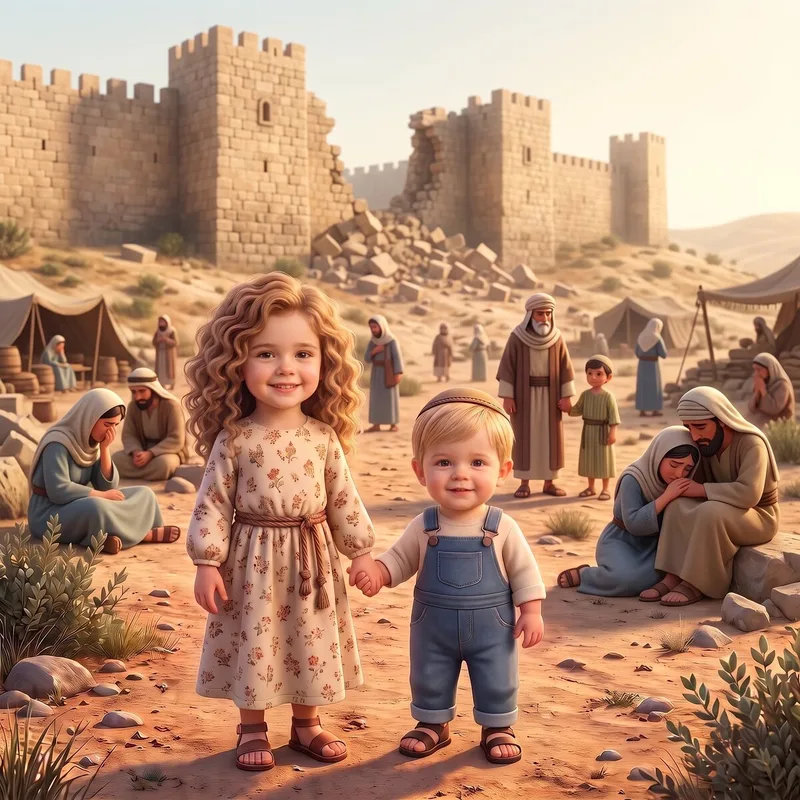
Torah Tale makes personalized Torah storybooks in which your child is the hero. Your child's name and, from one uploaded photo, their likeness appear on every page, illustrated in high-resolution 3D animated-film style. The Shiva Asar B'Tammuz story is available in the Holidays collection. Every book is written with careful rabbinical guidance and strict tznius, and our team reviews it before it goes to print.
Every book ends with a discussion page of 10 questions about the story, mixing comprehension with middos: what happened, and what it asks of the child. That page turns the book from something read to a child into something talked about at the table.
There are three formats: a 6x6 board book with rounded safety corners (ages 0-4), an 8x8 softcover photo book (ages 4-8), and an 8x8 hardcover photo book (ages 5-18). Up to eight siblings, ages 0 to 18, can appear in the same book. If you add parents and grandparents, they appear with the children on a closing family page in every format. Books are available in English, Hebrew and Yiddish.

Softcover 8″×8″

Hardcover 8″×8″

Board book 6″×6″

Coloring book 8.5″×11″
An optional matching coloring book (8.5x11, black-and-white line art) can be added to a one-time order. It is a weekday activity, for an afternoon during the week or the days before the fast, and never for Shabbos. The storybook itself is wonderful to read on Shabbos.
What questions can we ask at the Shabbos table?
On a Shabbos around the Three Weeks, reading a book together and talking is just right. Here are questions that need no more than conversation:
- What are the five things that happened on the 17th of Tammuz?
- Why do you think we remember sad things on a fast day?
- What can we do when something that matters to us breaks?
- How can we show that we care about the Beis HaMikdash and the Torah?
- What is one small act of kindness we can do this week?
For younger children, pick just one or two and let them answer in their own words.
Shiva Asar B'Tammuz is a day to remember, to care and to hope. If you would like your child to meet this story as the hero of their own book, you can create the book in about five minutes with a free account and a few short questions: your child's name, boy or girl, age and one photo, any siblings, the story, your community, the language and the format.
Frequently asked questions
What is Shiva Asar B'Tammuz in simple words for a child?
It is a fast day in the summer, on the 17th of the month of Tammuz. On this day, long ago, sad things happened to Yidden, and we stop and think about what we lost. We also begin to think about how to bring back the good through teshuvah, tefillah and being kind to one another.
What are the five things that happened on the 17th of Tammuz?
The Mishnah in Maseches Taanis lists them: the luchos were broken, the korban tamid stopped being offered, the walls of Yerushalayim were breached, Apostomos burned a Sefer Torah, and an idol was placed in the Heichal. The Torah itself tells us that Moshe broke the luchos, and Chazal tell us the date.
Do children have to fast on Shiva Asar B'Tammuz?
Children below bar or bas mitzvah age are not obligated to fast, and a child should never be pushed to do so. Instead, you can talk about the day and show them what it means to you. If you are unsure what chinuch is right for your child, ask your rav.
What is the lesson of Shiva Asar B'Tammuz for kids?
The Rambam teaches that fast days awaken our hearts to teshuvah. For a child, this means that when something is broken, whether a toy, a friendship or a mitzvah, we care about it and try to repair it. We also learn to miss the Beis HaMikdash and to cherish Torah.
How is Shiva Asar B'Tammuz connected to Tisha B'Av?
The 17th of Tammuz begins the Three Weeks, which end with Tisha B'Av. The Three Weeks are sometimes called bein hametzarim, a phrase from Eichah. Customs of the Three Weeks differ between communities, so ask your rav what your family keeps.