Shemini Atzeres for Kids: The Eighth Day & the King's Small Feast
Shemini Atzeres is the eighth day, a Yom Tov of its own right after Sukkos. Here is the story behind it, the mashal Chazal give, and how to explain it to children.
Published by Torah Tale.
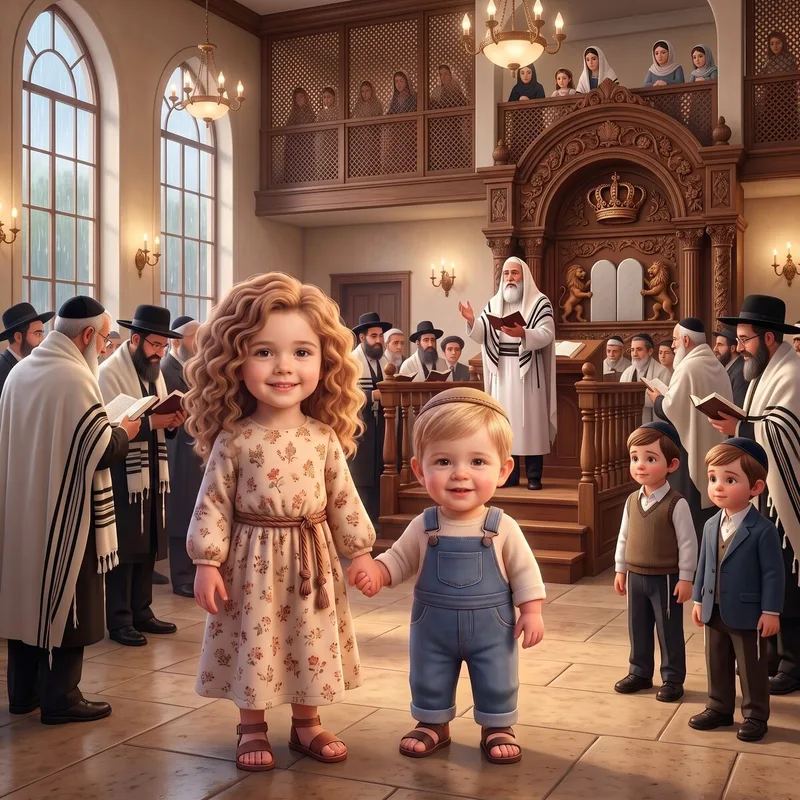
Create this book for your child
Shemini Atzeres is the Yom Tov that comes right after Sukkos, on the eighth day, and it stands as a Yom Tov of its own. The simplest way to tell it to a child is through Chazal's mashal: after a whole week of celebration, we are asked to stay one more day for a smaller, quieter meal. Children get this right away, because everyone knows how it feels when a good visit is about to end.
What is Shemini Atzeres, and how is it different from Sukkos?
Shemini Atzeres falls on 22 Tishrei, the day after Hoshana Rabbah, which is the seventh day of Sukkos. Its name means the eighth day of gathering. The Torah calls it by that name, and the word atzeres itself carries a sense of stopping or holding on.
Although it comes right after Sukkos, it is not another day of Sukkos. There is no lulav and esrog, and no hoshanos around the bimah. It has its own Yom Tov davening. The Torah gives it its own korbanos in Bamidbar 29:35-38: one bull, one ram and seven lambs.
Compare that with Sukkos, where the bulls brought each day went down in number from thirteen on the first day to seven on the seventh. That is a lot of korbanos, and then the Torah gives Shemini Atzeres a single bull.
Why is it called Atzeres? The king's small feast
Chazal tell us (Sukkah 55b, brought by Rashi on Bamidbar 29:36) that the seventy bulls of Sukkos correspond to the seventy nations of the world. The single bull of Shemini Atzeres corresponds to Klal Yisrael alone.
Then Chazal give a mashal. A king makes a large feast for everyone. When the feast is over and the guests are leaving, the king turns to his beloved friend and says, make me a small meal, so that I can enjoy you. The big feast was for many. The small meal is for closeness.
This is a mashal about Hashem's love for Yidden, not a picture of Hashem. For a child, the heart of it is easy: after the loud, busy, wonderful week of Sukkos, there is a day that is quieter and more personal.
What do we do on Shemini Atzeres?
The main avodah of the day is the Yom Tov itself: davening, the Yom Tov meals, and being together. A few things are special to this day.
- Tefillas Geshem. Before Musaf we ask Hashem for rain. From Musaf on, we begin saying mashiv haruach umorid hageshem in the Shemoneh Esrei.
- No lulav and esrog. The arba minim are put away after Hoshana Rabbah.
- The sukkah. Practice differs between Eretz Yisrael and chutz la'aretz, and between communities. Many families outside Eretz Yisrael eat in the sukkah without the bracha, so ask your rav what to do in your home.
- Simchas Torah. Outside Eretz Yisrael it is the next day. In Eretz Yisrael the two are celebrated on the same day.
If you want a book for the day that follows, we have the Simchas Torah story for kids, and the Sukkos story for kids covers the week before.
How do I explain Shemini Atzeres to a 3-year-old, a 7-year-old and a 10-year-old?
Ages 3 to 4. Keep it to one picture: when Sukkos is over, Hashem says, stay with Me one more day. You can say, we had a big party in the sukkah, and now we have one more special day. Point to something they can see, like the Yom Tov table, the candles or the extra-special clothes, and say that this is how we stay close.
Ages 6 to 7. Tell the mashal of the king and the small meal. Then ask, which is more special to you, the big birthday party or the quiet time with Abba or Ima afterward? Explain that Hashem loves every Yid, and this day is for being close. You can also explain geshem: we ask Hashem for rain, because everything we need comes from Him.
Ages 9 to 12. Bring in the korbanos. Why seventy bulls on Sukkos and one bull afterward? Share the explanation that the seventy correspond to the nations and the one to Klal Yisrael, and talk about what it means that Hashem has a special relationship with Yidden. Older children can also ask why Shemini Atzeres comes as a quiet day right after the big celebration of Sukkos, and how it connects to Simchas Torah.
What is the lesson of Shemini Atzeres?
The lesson is closeness. A great event is wonderful, but there is a time to put the noise aside and simply be with the people you love. For children this can be very practical: it is the moment at the end of a family visit, a long Shabbos meal or a day out when we say, just a bit longer, please.
There is also a middah here, which is appreciating what we have been given. After a week of sukkah, lulav, esrog and guests, the day invites us to take it in rather than rush on to the next thing.
Questions to ask at the Yom Tov table
Reading and talking are exactly right for Yom Tov, and these need nothing but conversation. Here are six to try:
- Why do you think the Torah gives this day its own name?
- Why does the king ask his friend to stay for a small meal and not a big one?
- What do you like best about a quiet visit with someone you love?
- What did you enjoy most in the sukkah this year?
- Why do we ask Hashem for rain on this day?
- Who in our family would you like to spend one more day with, and what would you do together?
Younger children can answer the third and fourth questions in a sentence. Older ones usually enjoy the first two.

Softcover 8″×8″

Hardcover 8″×8″

Board book 6″×6″

Coloring book 8.5″×11″
What is a personalized Shemini Atzeres book like?
A Torah Tale book puts your child in the Yom Tov story. Their name and, from one uploaded photo, their likeness appear on every page, illustrated in 3D animated-film style. Shemini Atzeres is in the Holidays collection, one of the ten categories in the story picker.
Every book ends with a discussion page of ten questions about the story, mixing comprehension with middos: what happened, and what it asks of the child. That page is what turns the book from something read to a child into something talked about at the table. If you add parents and grandparents, they appear with the children on a closing family page in every format.
The format depends on your child's age. The board book is 6x6 with rounded safety corners, for ages 0-4. The softcover is 8x8, for ages 4-8, and the hardcover is 8x8, for ages 5-18. Softcover and hardcover open with a dedication page.
How can a book make this Yom Tov part of your home?
Shemini Atzeres is easy to overlook because it comes right between two bigger days. A book gives it a place in your child's mind before it arrives. You can read it on Yom Tov itself, on a long afternoon or at the table, because reading is entirely appropriate on Yom Tov.
If your child enjoys coloring, an optional matching coloring book (8.5x11, black-and-white line art) can be added to a one-time order. Coloring is melacha, so keep it for weekdays only, such as the days before Yom Tov or on Chol HaMoed Sukkos, when it is permitted.
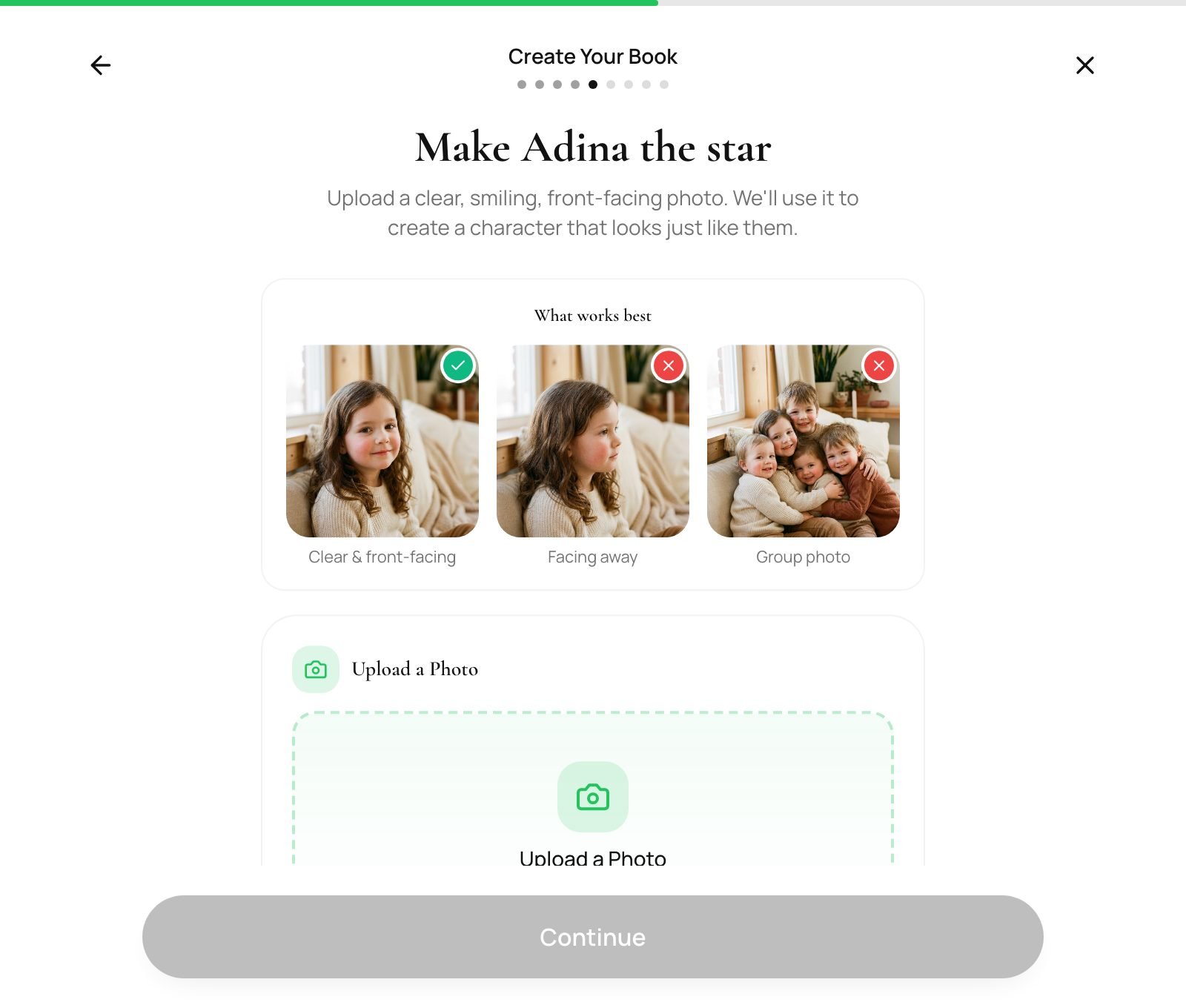
Creating a book takes about five minutes. You make a free account and answer a few short questions: each child's name, boy or girl, age and one photo, any siblings, the story, your community (asked once), the language and the format. Languages are English, Hebrew and Yiddish. Up to eight children can appear in the same book.
Ready to start? You can create the book and make the eighth day a story your child can see themselves in.
Frequently asked questions
What is Shemini Atzeres in simple words for a child?
Shemini Atzeres means the eighth day of gathering. After seven days in the sukkah, Hashem gives Yidden one more special Yom Tov day, a quiet day of being close. Children understand it as the day after a big party when the closest guests are asked to stay a little longer.
Is Shemini Atzeres part of Sukkos?
It follows Sukkos immediately, but it is a Yom Tov of its own. There is no lulav and esrog on it, and it has its own Yom Tov davening. Because it comes right after Sukkos, many families still eat in the sukkah in chutz la'aretz, so ask your rav about your community's practice.
How is Shemini Atzeres different from Simchas Torah?
Shemini Atzeres is the eighth day, and Simchas Torah is the day we finish the Torah and begin again. Outside Eretz Yisrael they are two separate days, with Simchas Torah the day after. In Eretz Yisrael they are celebrated on the same day.
What is the lesson of Shemini Atzeres for children?
The lesson is that closeness to Hashem and to each other matters more than the big event. After the lively week of Sukkos, we are given a quiet day to be together. Children can also learn to value time with the people they love, the way a good visit feels even better when it is not rushed.
Can I read a Shemini Atzeres book to my child on Yom Tov?
Yes, reading a storybook is entirely appropriate on Yom Tov, and a long afternoon is a good time for it. A coloring book is different, because coloring is melacha, so keep it for weekdays, such as the days before Yom Tov or on Chol HaMoed Sukkos, when it is permitted.
How does a personalized Torah Tale book for Shemini Atzeres work?
You create a free account and answer a few short questions: each child's name, boy or girl, age, one photo, siblings, the story, your community, the language and the format. The child's name and likeness then appear on every page in 3D animated-film style. Every book ends with a discussion page of ten questions that mix comprehension with middos.