Respecting Holy Seforim (כבוד ספרים) for Kids: Teaching It at Home
Kavod seforim is a mitzvah a child can keep every day, from the way a sefer is carried to where it is put down. Here is how to explain it to a toddler, a school-age child and an older one.
Published by Torah Tale.
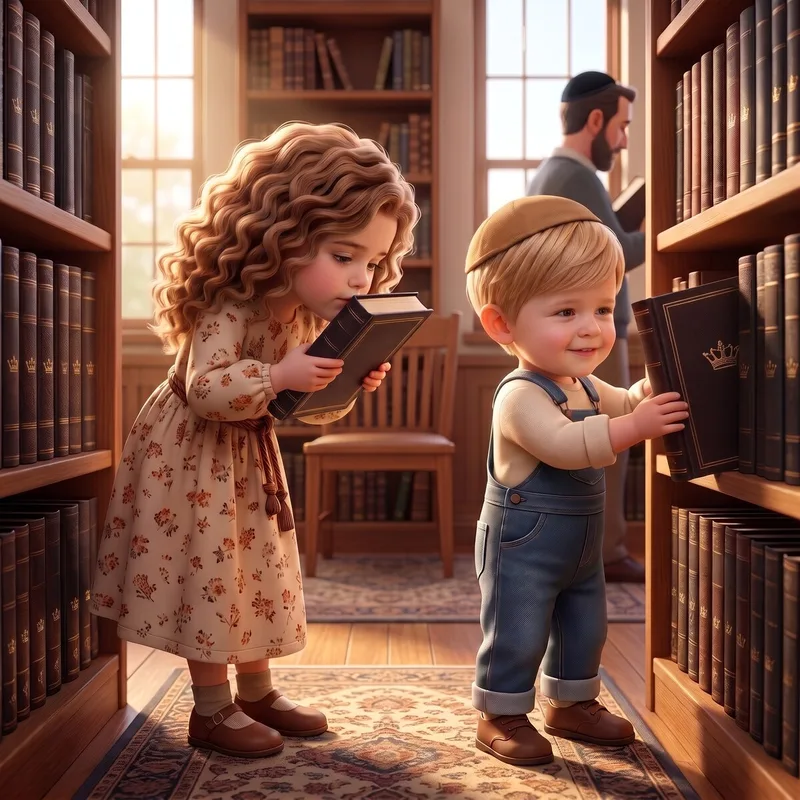
Create this book for your child
Kavod seforim (כבוד ספרים) is the mitzvah of treating holy books with honor, and it is one of the most natural mitzvos for a child to keep because it happens at the table, in the bedroom and in cheder every single day. Children take to it quickly since it is physical and visible: you carry a sefer carefully, you kiss it, and you never leave it on the floor.
What is kavod seforim, in simple words?
It means that a sefer is not like other books. It holds Torah, so we treat it with care and love. A siddur, a Chumash, a Gemara and a bencher all call for this respect in their own way.
The idea behind it is one a child can grasp: the more precious something is, the more carefully we handle it. We do not need to prove anything with big words. A child who sets a sefer down gently is already doing the mitzvah.
What does a child actually do to respect seforim?
The best answers are small and specific. Here are everyday habits many families teach:
- Carry a sefer with two hands, not tucked under one arm while running.
- Do not leave seforim on the floor. Put them on a shelf, a table or a chair.
- Close a sefer when you finish rather than leaving it open and face down.
- Keep seforim away from spills and crumbs.
- Do not bring seforim into the bathroom.
- Kiss a sefer that has fallen and put it back where it belongs.
Some details, such as which seforim may be placed on top of which, are matters for your rav or your child's rebbi. A younger child does not need them yet; an older child should learn them from a person, not from a blog.
Why do we kiss a sefer that fell?
A child usually asks this the first time he sees it, and the answer is simple. We kiss the sefer to show that we love it and respect it, and we put it back where it belongs. You can tell a young child that it is like saying sorry to the sefer.
It also helps to say that a fallen sefer is not a disaster. Everyone drops things. What matters is what we do next, and a child learns that from watching you do it without fuss.
How do I explain it to a 3-year-old, a 7-year-old and an 11-year-old?
Ages 3 to 4: Keep it to one sentence and one action. Say, This sefer has Torah in it, so we hold it with two hands and give it a kiss. Let the child carry his or her own small siddur or board book to the table.
Ages 6 to 7: Add the why. Ask, What do you do with something very special that belongs to someone you love? Then connect it to the sefer on the shelf. This is also the age to show the child the shelf in the house where seforim live and to let him or her be in charge of keeping it neat.
Ages 10 to 12: Move from habits to questions. What is the difference between respecting a sefer and being afraid of it? How does the way we treat a sefer show what we feel about the Torah inside? This is also the time for a rav or rebbi to explain the details of how seforim are placed and what happens to old ones.
The same idea shows up elsewhere in a child's day. When a Sefer Torah is carried through the shul, people stand and children watch what the grown-ups do. You can read more about that scene in our article on Hachnasas Sefer Torah for kids.
What do we do with old or torn seforim?
Seforim that are worn out are not thrown into ordinary trash. They are put aside for shaimos, which is a way of laying holy writings to rest respectfully. Many shuls and schools have a shaimos box, and your rav can tell you what to put in it.
It is worth involving your children. Let a child carry a torn siddur to the box and say that we do not throw away something holy. The lesson sticks because the child did it with his own hands. If you are not sure whether a particular book or paper belongs in shaimos, ask your rav.
What is the Torah Tale book about respecting holy seforim like?
This story is in the Mitzvos collection, which covers mitzvos a child keeps, set in everyday life today. Your child is the hero: the name and, from one uploaded photo, the likeness appear on every page in a 3D animated-film style. Up to eight siblings, ages 0 to 18, can appear in one book.
Every book is written with careful rabbinical guidance and strict tznius, and our team reviews it before it goes to print. Every book also ends with a discussion page of ten questions mixing comprehension with middos: what happened, and what it asks of the child. If you add parents and grandparents, they appear with the children on a closing family page in every format.

Softcover 8″×8″

Hardcover 8″×8″

Board book 6″×6″

Coloring book 8.5″×11″
The formats follow the child's age. The board book is 6"x6" with rounded safety corners, for ages 0-4. The softcover is an 8"x8" photo book for ages 4-8, and the hardcover is an 8"x8" photo book for ages 5-18. Softcover and hardcover open with a dedication page. There is also an optional matching coloring book, 8.5"x11" in black-and-white line art. The coloring book is for weekdays only, such as an afternoon during the week or erev Shabbos, never for Shabbos or Yom Tov, because coloring is melacha.
What can we ask at the Shabbos table?
Reading is entirely appropriate on Shabbos, and a storybook on a mitzvah gives the table something to talk about. Whether you use the book's discussion page or your own, these questions need only talking:
- Where in our house do the seforim live, and why there?
- What do we do when a sefer falls?
- Why do we not put seforim on the floor?
- Who showed you how to hold a sefer carefully?
- Which sefer in our house do you like best, and how do you take care of it?
Let the youngest answer first, and let the older children add what they learned in cheder or school. A child who explains a mitzvah to a younger sibling has understood it better than one who only heard it.
For another everyday mitzvah that begins at home, see our article on learning Torah every day, and for a child's first steps in learning, the first day in cheder.
Ready to make it a book your child is in?
Creating a book takes about five minutes. You open a free account and answer a few short questions: each child's name, boy or girl, age and one photo, any siblings, the story, your community (asked once), the language and the printed format. Languages are English, Hebrew and Yiddish. When you are ready, you can create the book and choose the Respecting Holy Seforim story from the Mitzvos category.
Frequently asked questions
How do I explain kavod seforim to a young child?
Tell a three- or four-year-old that a sefer has Hashem's Torah inside, so we hold it carefully, keep it off the floor and give it a kiss. Keep it to one or two actions that the child can do himself or herself, such as carrying a sefer with two hands and putting it on the shelf. Children learn this mostly by watching what the grown-ups do.
Why do we kiss a sefer that fell?
We kiss a fallen sefer to show love and respect and to set right the moment of disrespect, and then we put it back where it belongs. Children understand this easily as saying sorry to a sefer. If your child asks about details such as which seforim and how, ask your rav or your child's rebbi.
What do we do with old or torn seforim?
Seforim and papers containing holy words are not discarded with ordinary trash. They are set aside to be buried as shaimos, and many shuls and schools have a shaimos box. Ask your rav what exactly goes in, including whether a particular children's book or worksheet belongs there.
At what age can a child start respecting seforim?
A toddler can already learn to carry a book with two hands and to kiss it. Torah Tale offers a board book (6x6 with rounded safety corners, ages 0-4), a softcover (8x8, ages 4-8) and a hardcover (8x8, ages 5-18), so the same story can grow with the child.
What is in the Torah Tale book about respecting holy seforim?
It is a story from the Mitzvos collection that shows your child, by name and likeness, in everyday life today keeping a mitzvah. Every book ends with a discussion page of ten questions that mix comprehension with middos, so the family can talk about what happened and what it asks of the child. If you add parents and grandparents, they appear with the children on a closing family page in every format.