Parshas Noach for Kids: The Teivah, the Animals & the Rainbow
Parshas Noach gives children a boat, a flood, a dove and a rainbow, and one quiet question underneath all of it: what do you do when everyone around you is doing the wrong thing? Here is how to tell it, how to answer the hard parts, and what to ask at the Shabbos table.
Published by Torah Tale.
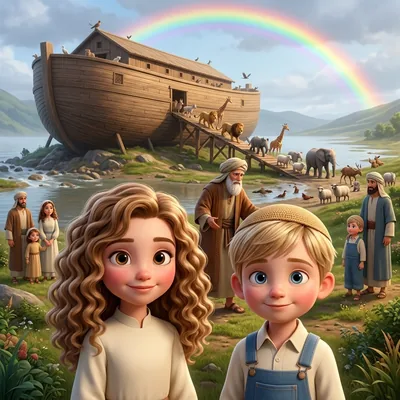
Parshas Noach is the second parsha in the Torah. It tells how Hashem saw a world that had become full of stealing and cruelty, told one righteous man to build a teivah, brought the Mabul, and began the world again from one family and the animals they carried through it. Children come for the boat and the animals. What stays with them is Noach standing alone in a generation that laughed at him, and the rainbow at the end that means the world will never be washed away again.
What happens in Parshas Noach?
Ten generations passed from Adam HaRishon to Noach. The Torah says the earth had become corrupt and filled with chamas, which Rashi explains as robbery, people simply taking what belonged to someone else. Noach is described as an ish tzaddik tamim, a righteous and wholehearted man in his generations.
Hashem told Noach to build a teivah of gopher wood, sealed with pitch inside and out, with three levels and a tzohar for light. Rashi, quoting Chazal, teaches that Noach worked on it for 120 years, so that people passing by would ask what the enormous wooden box was for and would still have time to change.
The animals came to the teivah, seven pairs of each tahor species and one pair of the rest. Then the rain fell for forty days and forty nights, and the water stayed high over the earth for a hundred and fifty days. Inside, Noach and his family fed every creature, each one at its own time. The Midrash relates that the feeding never stopped, day or night, and that Noach was worn out by the work of caring for them.
When the water went down, the teivah came to rest on the mountains of Ararat. Noach sent out a raven, and then a dove, which came back the second time with an olive leaf in its beak. On the third try the dove did not return, and Noach knew the ground was dry. They came out, Noach brought a korban, and Hashem made a bris with the world, giving the keshes, the rainbow, as its everlasting sign.
The parsha does not end there. Generations later, everyone on earth spoke one language and gathered to build a tower reaching the heavens. Hashem confused their speech so they could not understand one another, and they scattered across the world. That is Migdal Bavel, and the parsha closes by tracing the generations down to Avram, who is Avraham Avinu.
The middah in Parshas Noach: doing right when nobody else is
Every child knows what it feels like when the whole group is doing something and he is the only one who thinks it is wrong. That is exactly Noach's position, stretched over 120 years. He kept building while people watched and mocked, and he kept being honest in a world where taking things had become normal.
There is a second middah underneath the first, and it is the one younger children grab hold of. Noach spent a year of his life feeding animals that could not thank him. Chazal describe him getting up through the night for creatures that ate at odd hours. A child who has been asked to fill the dog's water bowl or hold the door for a younger sibling understands that kind of tzaddik immediately.
Older children in cheder will also meet the pesukim about Noach planting a vineyard afterward and what happened with his sons. Handled simply, the lesson taught there is about kavod for a parent, and about how much a person can lose control of himself after everything else has gone right.
How to explain Parshas Noach at different ages
The story does not change. The frame around it does.
Ages 2 to 4
Keep it to the teivah and the animals. "People were being mean and taking things that were not theirs. Hashem told Noach to build a big wooden boat, and Noach brought all the animals inside where it was safe. It rained and rained. Then a little dove brought back a leaf, and everybody came out, and Hashem put a rainbow in the sky." Nothing about what happened outside the teivah. A board book with rounded corners is the right shape for this age, because it will be carried, chewed on and handed back for another reading.
Ages 5 to 8
Now the moral question can be named. Ask why Hashem waited so long instead of bringing the Mabul right away, and bring Rashi's 120 years as the answer. This age can also handle the practical detail they love: how the food was stored, how the levels were divided, how long the family was inside. Say plainly that people who refused to stop hurting each other were not saved, and then move on. Do not linger there.
Ages 9 to 12
This age is ready for the famous machlokes: was Noach a tzaddik only compared to his generation, or would he have been even greater in a better one? Rashi brings both views. Put it next to Avraham Avinu, who argued with Hashem to save Sedom, and ask why Noach did not. That question, asked respectfully, is one of the best conversations you will have with a ten year old about the Torah, and it connects straight into Parshas Bereishis before it and Lech Lecha after it.
Five questions for the Shabbos table
These work over cholent, and every one of them has a real answer in the parsha.
- Why did Hashem tell Noach to take so long building the teivah, when Hashem could have made it appear in a moment?
- Noach fed the animals for a whole year. Who in our house needs feeding, watering or checking on, and who does it?
- What is the hardest thing about being the only one doing the right thing?
- Why is a rainbow a good sign for a promise? What makes it different from a sign written on paper?
- At Migdal Bavel everyone worked together. Why was that not a good thing?
Every Torah Tale book ends with a dedicated discussion page carrying 10 questions on the story, mixing what happened with what it asks of the child. That page is the reason the book tends to get read at the table rather than only at bedtime.
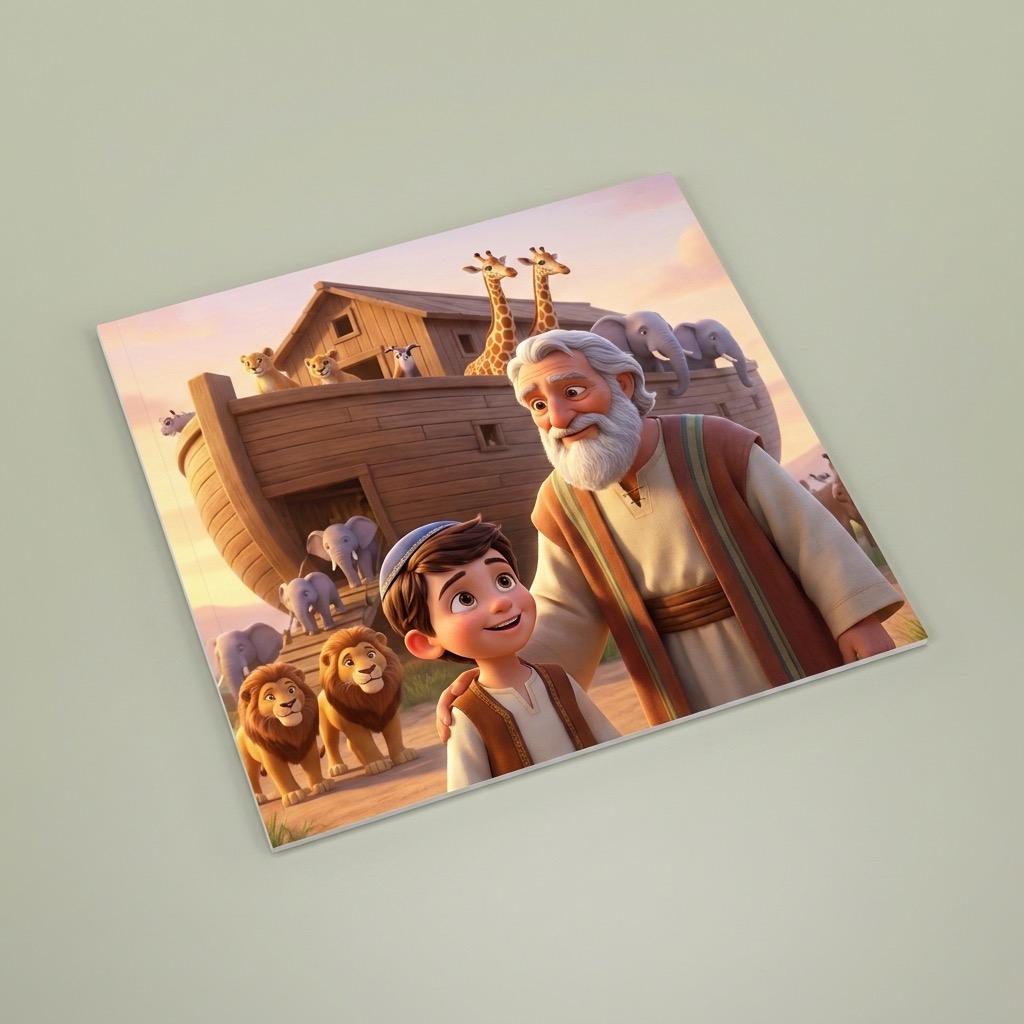
Softcover 8″×8″
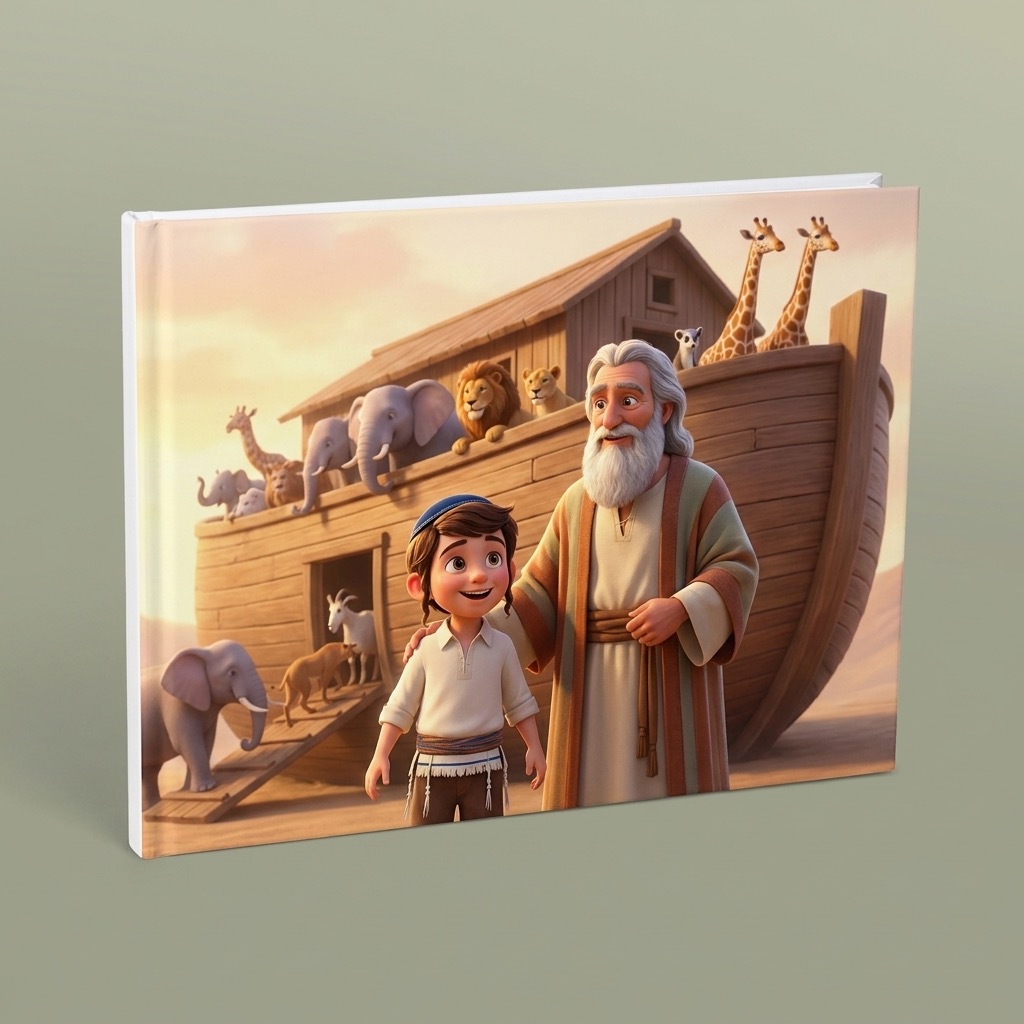
Hardcover 8″×8″
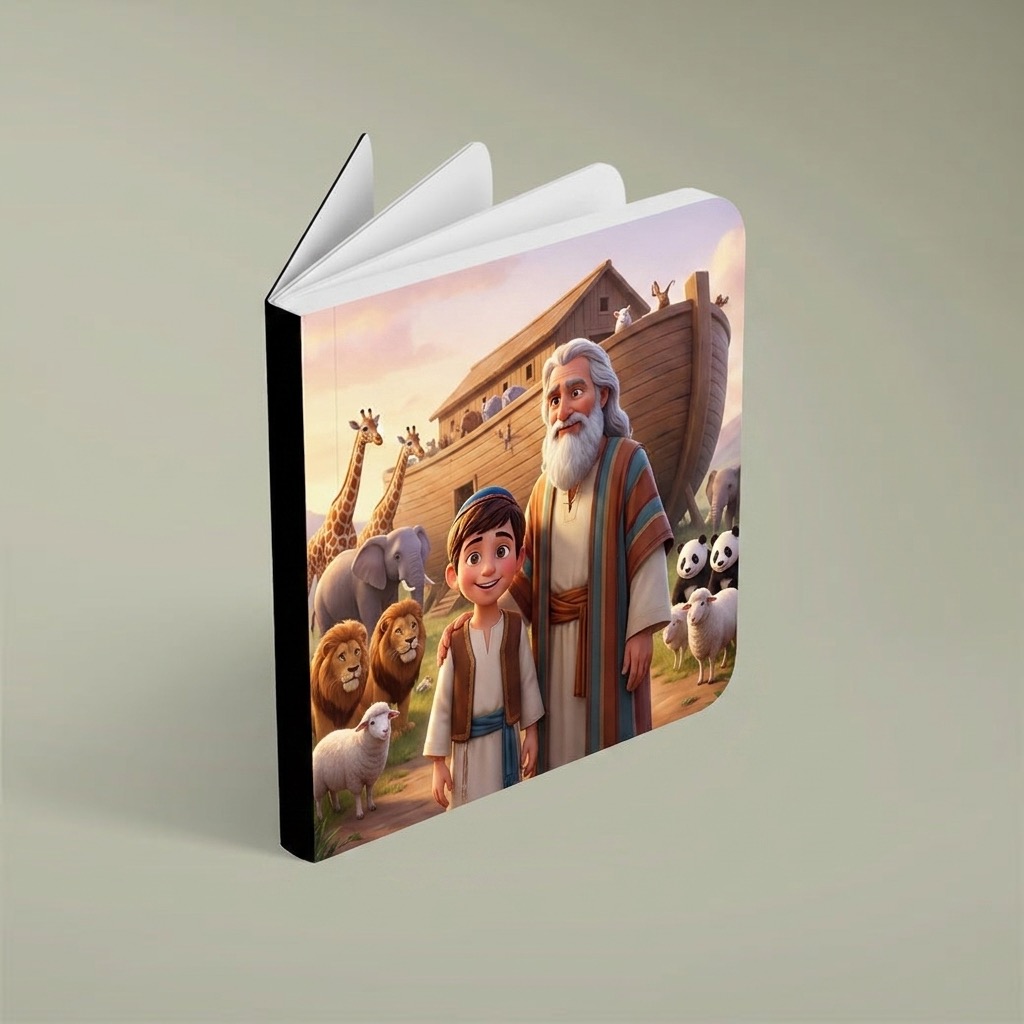
Board book 6″×6″
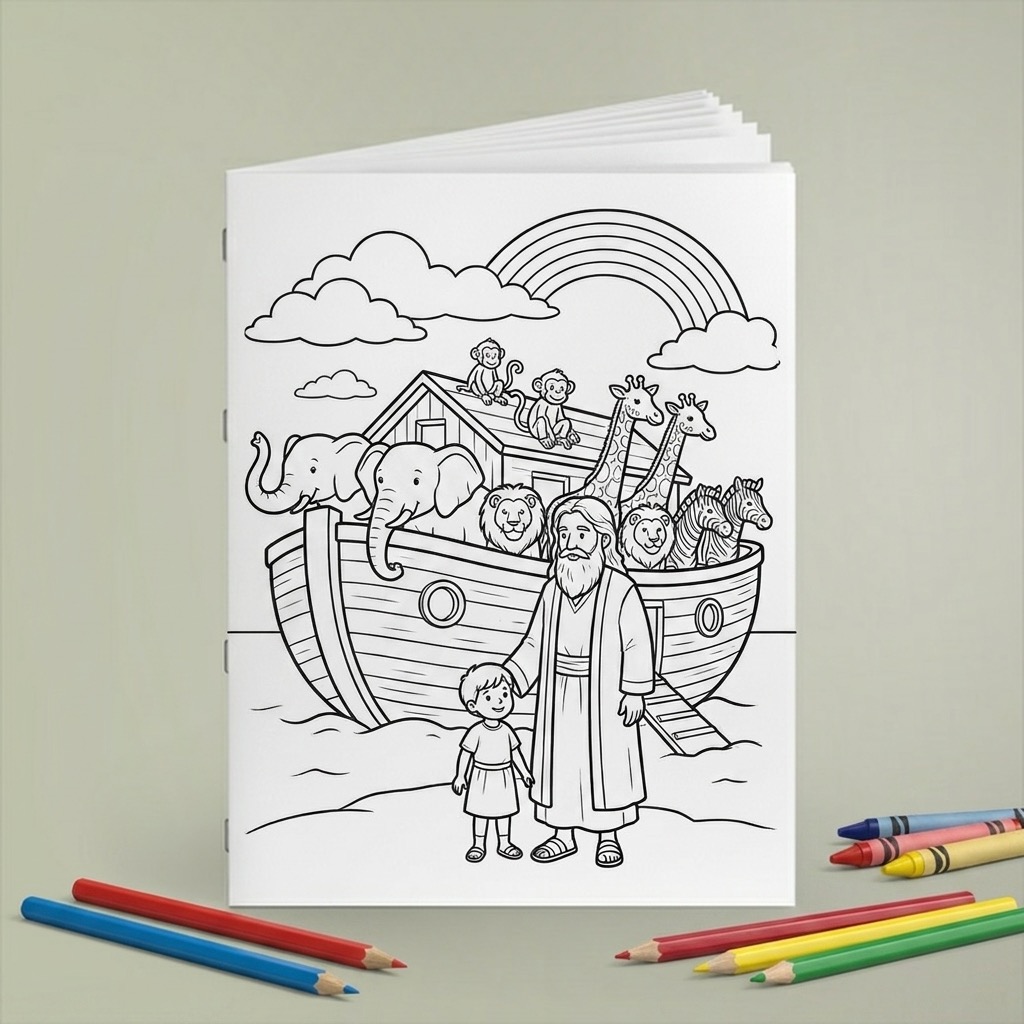
Coloring book 8.5″×11″
What a personalized Torah Tale book of Parshas Noach is like
In a Torah Tale book, your child is inside the story. Their name is in the text and their face, illustrated in high-resolution 3D Pixar style from one photo you upload, appears on every page. They are handing Noach a plank of gopher wood, they are carrying the feed up to the second level, they are at the window when the dove comes back with the olive leaf. Up to four siblings can be in the same book, which for Noach is almost a gift, since there is no shortage of animals to go around.
Every book is written with careful rabbinical guidance and strict tznius, and reviewed by our team before printing. For Noach specifically that matters, because the Mabul can be told badly. Ours keeps the child's eye on the teivah, the animals and the rainbow.
Choose the format by age: the 6x6 board book for two to four, the 8x8 softcover for four to eight, the 8x8 hardcover in square or landscape for five to twelve. There is also a matching 8.5x11 coloring book in black-and-white line art. Save that one for a weekday, ideally erev Shabbos while you are cooking, since coloring is melacha and is not for Shabbos or Yom Tov. The storybook itself is exactly right for the Shabbos table or a long Yom Tov afternoon.

When should I order the Noach book?
The book creator always suggests next week's parsha, not this week's, with a live countdown to the order deadline for delivery before that Shabbos. So the week you are learning Bereishis is the week to order Noach. Standard shipping is $3 and takes 5-8 business days, express is $6 and takes 3, and we ship worldwide. If you want the parsha to arrive every week without you remembering, there is a Weekly subscription, and a Monthly or Year Bundle as well. More on picking the right week is in how to choose the weekly parsha for your child's book.
Setting it up takes about five minutes and eight short questions: name, boy or girl, age, one photo, siblings, story, language, printed format. Books are available in English, Hebrew and Yiddish, and you can order the same story in more than one language. The full walkthrough is in how to create a personalized Torah storybook.
Noach kept building while nobody believed him, and the rainbow at the end belongs to every child who has ever had to be the only one doing the right thing. Create the book and let your child ride out the Mabul from inside the teivah, by name, on every page.
Frequently asked questions
What is the main lesson of Parshas Noach for children?
The main lesson is that a person can stay good even when everyone around him is not. The Torah calls Noach a tzaddik in his generation, and Chazal tell us the world had filled with chamas, with people taking from one another. For a child, this translates into the playground question: what do you do when the whole group is doing something you know is wrong?
How do I explain the Mabul to a young child without frightening him?
Keep the focus on the rescue rather than on what happened outside the teivah. Tell a four or five year old that people were hurting each other and would not stop, so Hashem washed the world clean and kept Noach, his family and the animals safe in a big wooden teivah. Do not describe drowning or bodies, and end on the dove, the olive leaf and the rainbow, which is where the parsha itself ends up.
How long did Noach build the teivah, and is that in the pesukim?
The Torah does not state the number of years directly. Rashi, drawing on Chazal, explains that Noach worked on the teivah for 120 years so that people would ask him what he was building and have time to change their ways. It is taught as Rashi rather than as a pasuk, and children old enough to learn Chumash with Rashi can be told exactly that.
What does the rainbow mean in Parshas Noach?
After Noach and his family left the teivah, Hashem made a bris with the world and gave the keshes, the rainbow, as its sign, promising never again to bring a flood that destroys all life on earth. That is why there is a brachah said upon seeing a rainbow. Children find this concrete and comforting, because the sign is something they can actually see in the sky.
How is the Migdal Bavel story connected to Noach?
Migdal Bavel comes at the end of Parshas Noach, generations after the Mabul. People all spoke one language and joined together to build a tower reaching the sky, and the Torah relates that Hashem mixed up their language so they could not understand each other and they scattered across the earth. Taught to children, it makes the point that being united is only good when what you are united for is good.
What age is a Torah Tale Parshas Noach book right for?
There is a format for each stage. The 6x6 board book with rounded safety corners suits ages two to four, the 8x8 softcover fits roughly ages four to eight, and the 8x8 hardcover in square or landscape works for ages five to twelve. Up to four siblings can appear in the same book, so one Noach book can be read to a whole row of children.