Parshas Naso for Kids: The Wagons, the Nesiim & Birkas Kohanim
Parshas Naso is the longest parsha in the Torah. A parent's guide to the Levi'im's jobs, the wagons, the twelve nesiim, the nazir and Birkas Kohanim, with questions to ask at the Shabbos table.
Published by Torah Tale.
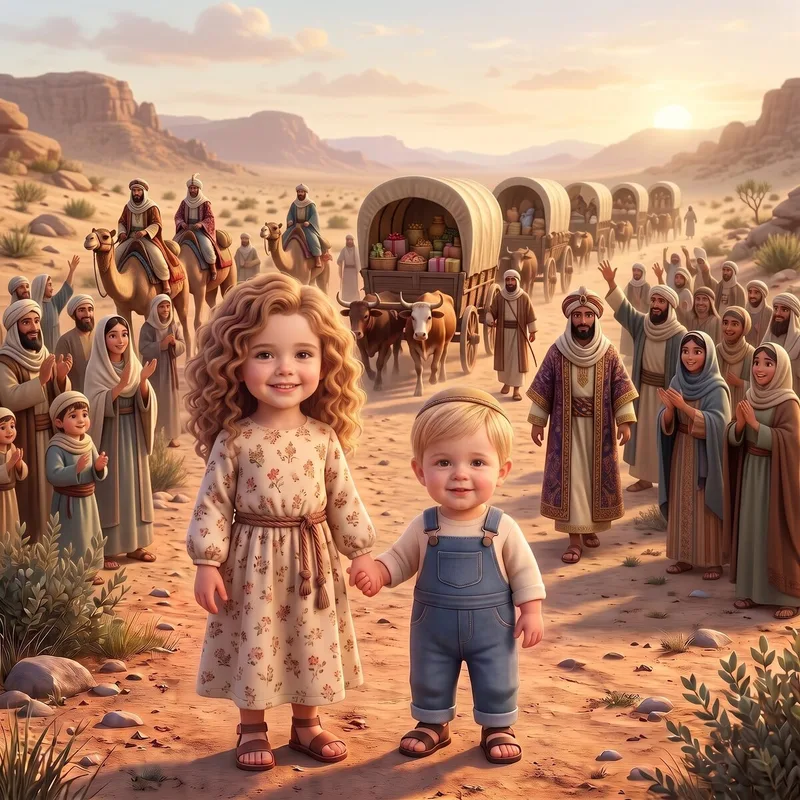
Create this book for your child
Parshas Naso is the second parsha in Sefer Bamidbar and the longest parsha in the Torah, and it is usually read soon after Shavuos. For children it is a parsha about jobs and gifts and brachos: the Levi'im carry the Mishkan, the nesiim bring wagons and offerings, and the kohanim bless Bnei Yisrael. Every Yid has a place in Hashem's home, and the Torah notices each one.
What happens in Parshas Naso?
The parsha begins by counting the Levi'im of Gershon and then Merari, men from thirty to fifty years old who come to do the avodah in the Ohel Moed. The family of Kehas was counted at the end of the previous parsha. Gershon's family carries the curtains and coverings of the Mishkan. Merari's family carries the boards, bars, pillars and sockets.
The Torah then gives mitzvos for a camp where Hashem's presence rests. Those who are tamei are sent out of the camp. A person who has wronged someone confesses and returns what he owes, adding a fifth. The Torah also describes the nazir, who takes on extra kedushah. A few parts of the parsha, such as the sotah, are for older students to learn with a rebbi or teacher.
Then the Torah returns to the day Moshe finished setting up the Mishkan. The nesiim bring gifts, and each one brings his own offering on his own day. The parsha closes with Moshe entering the Ohel Moed and hearing the voice speaking to him from above the kapores, between the two keruvim.
Why did the nesiim bring wagons and oxen?
The Torah tells us that the twelve nesiim brought six covered wagons and twelve oxen, a wagon for every two nesiim and an ox from each one. They brought them to the Mishkan because the Levi'im had a lot to carry. The pasuk says Hashem told Moshe to accept the gift and give it to the Levi'im according to their work.
Moshe gave Gershon two wagons and four oxen, and Merari four wagons and eight oxen. The family of Kehas received none, because their work was the holy keilim, which they carried on their shoulders (Bamidbar 7:9). A child can notice that fair does not always mean the same: each family got what its job needed.
Why does the Torah repeat each nasi's offering twelve times?
Each day for twelve days, one nasi brought a silver dish, a silver bowl and a gold spoon filled with ketores, along with animals for korbanos. Nachshon ben Aminadav of Shevet Yehuda brought on the first day. The offering is the same each time, yet the Torah writes it out in full for every nasi, in the order of the shevatim.
Chazal explain that the offerings were the same but each nasi brought his with his own thoughts and his own shevet in mind. Children understand this well: two children can give the same gift, and each gift is still its own. For a little child it is enough to say that Hashem notices every person and every gift.
What is Birkas Kohanim, and how can we use it at home?
In Naso, Hashem tells Moshe to teach Aharon and his sons how to bless Bnei Yisrael. The blessing has three short parts: יברכך ה' וישמרך. יאר ה' פניו אליך ויחנך. ישא ה' פניו אליך וישם לך שלום. The pasuk ends: ושמו את שמי על בני ישראל ואני אברכם, 'they shall place My name on Bnei Yisrael, and I will bless them.' The meforshim explain the words about Hashem's face as His turning to us with favor, so for children it is a bracha for kindness, protection and shalom.
Many families add Birkas Kohanim to the Friday-night blessing of their children. It takes about fifteen seconds, and a child who hears it every week knows it by heart long before he can read it.
What is the lesson of Parshas Naso for children?
- Everyone has a job. Gershon, Merari and Kehas each carry different parts of the Mishkan, and every one of those jobs is needed.
- Give with a full heart. The nesiim step forward to help the Levi'im, and each brings his own gift.
- Make it right. When someone takes what is not his, the Torah asks him to confess and return it with a fifth added. See Never Taking What Is Not Mine for how to talk about this at home.
- Bless others. The parsha also gives the kohanim a bracha to say over Bnei Yisrael, and children can give brachos too.
If your child has just learned about the counting and the degalim, the previous parsha is covered in Parshas Bamidbar for Kids.
How do I explain Parshas Naso to a 4-year-old, a 7-year-old and a 10-year-old?
For a 4-year-old: use one picture. The Mishkan is being carried through the midbar, the leaders bring wagons and oxen to help, and the kohanim bless Bnei Yisrael. Say Yevarechecha together and let your child say 'Hashem should bless you' back to you. For this age, a 6x6 board book with rounded safety corners (ages 0-4) is a good fit.
For a 7-year-old: tell it as a story with a question in it. Why did Kehas receive no wagons? Then talk about how each family's job was different. An 8x8 softcover (ages 4-8) suits this age.
For a 10-year-old: ask the harder question. Why does the Torah write the same offering twelve times? Then bring Chazal's answer and talk about giving the same thing with your own heart. An 8x8 hardcover (ages 5-18) suits an older child.

Softcover 8″×8″

Hardcover 8″×8″

Board book 6″×6″

Coloring book 8.5″×11″
What questions can we ask at the Shabbos table about Naso?
- Who carried the Mishkan, and why did each family have a different job?
- Why did Kehas get no wagons?
- If you were a nasi, what would you want to bring to the Mishkan?
- What do we do when we take something that isn't ours?
- Who would you like to bless, and what would you say?
These are talking questions only, so they fit the Shabbos table. If your child wants to draw the wagons or color a picture, that is a weekday activity for erev Shabbos or an afternoon during the week, never for Shabbos itself.
What is a personalized Torah Tale book of Parshas Naso like?
In a Torah Tale book of Parshas Naso, your child is the hero, with their name and, from one uploaded photo, their likeness on every page in a 3D animated-film style. Up to eight siblings can appear in the same book. The book is written with careful rabbinical guidance and strict tznius, and reviewed by our team before it goes to print.
Softcover and hardcover books open with a dedication page. Every book ends with a discussion page of ten questions mixing comprehension with middos, so the book becomes something talked about at the table and not just something read. If you add parents and grandparents, they appear with the children on a closing family page in every format. A matching coloring book (8.5x11, black-and-white line art) can be added as a weekday activity.
Creating a book takes a free account and a few short questions: each child's name, boy or girl, age and one photo, any siblings, the story, your community (asked once), the language (English, Hebrew or Yiddish) and the format. You can choose Naso in the story picker. The creator also suggests the first parsha that can still arrive before its Shabbos, with a live countdown to that parsha's order deadline.
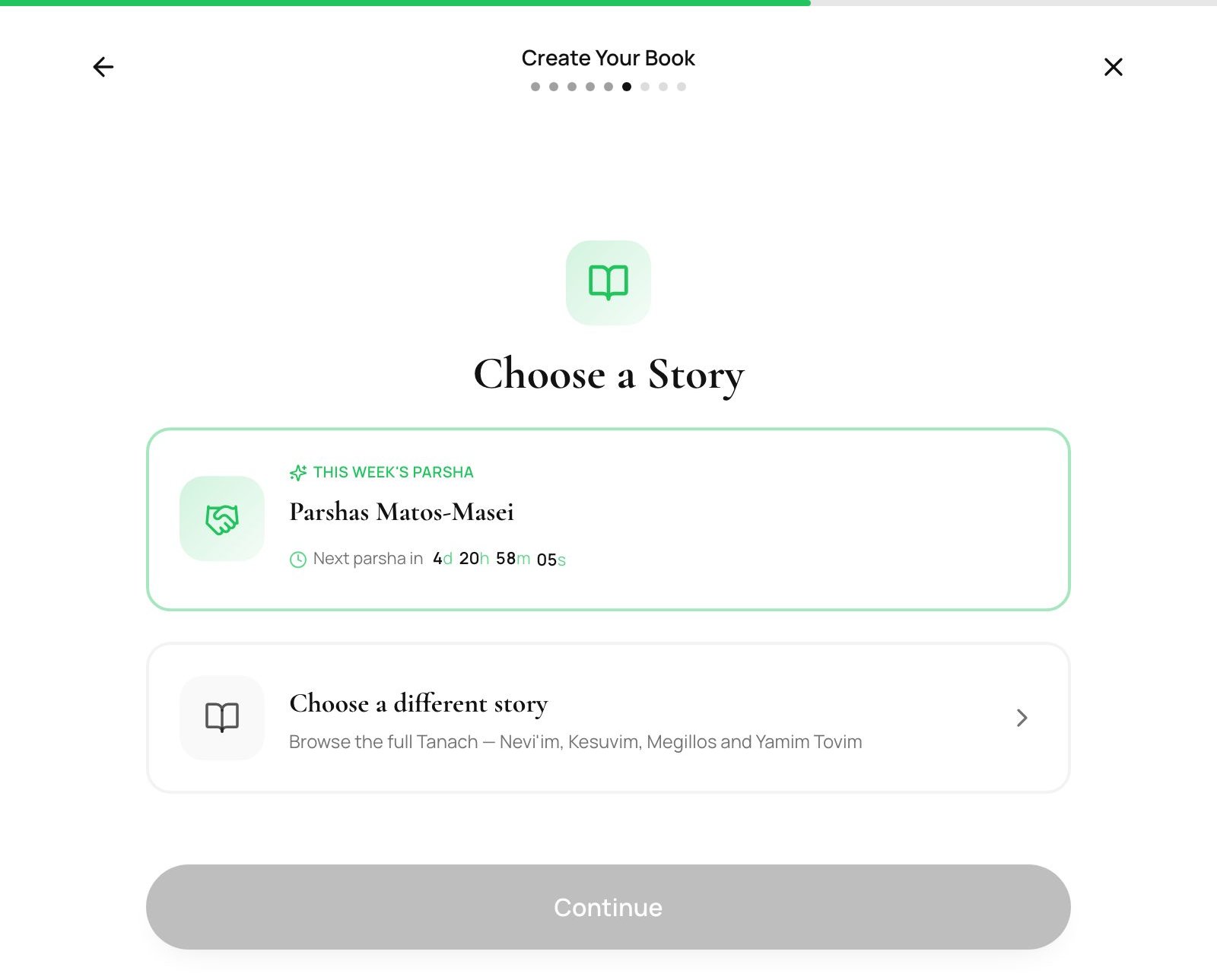
Ready to start? Create the book for your child and choose Parshas Naso.
Frequently asked questions
What is Parshas Naso about?
Parshas Naso is the second parsha in Sefer Bamidbar. It gives the Levi'im of Gershon and Merari their jobs carrying the Mishkan, teaches mitzvos about confessing and returning what we owe, the nazir and Birkas Kohanim, and tells how the twelve nesiim brought wagons and offerings to dedicate the Mishkan. It closes with Moshe hearing Hashem's voice speaking to him from above the kapores.
What is the lesson of Parshas Naso for children?
Every person has a place and a job in Hashem's home, and the Torah notices each one. Children can also learn to give with a full heart, to make things right when they have wronged someone, and to wish others bracha.
Why does the Torah repeat each nasi's offering twelve times?
Each nasi brought his offering on his own day, and the Torah gives each one its own full account. Chazal explain that although the offerings were the same, each nasi brought his with his own thoughts and his own shevet in mind. For a young child it is enough to say that Hashem notices each person and each gift.
How do I explain Parshas Naso to a 4-year-old?
Keep to one picture: the Mishkan is being carried, and the leaders bring wagons and oxen to help the Levi'im carry it. Then add that the kohanim bless Bnei Yisrael, and say the three pesukim of Yevarechecha together. Skip the harder topics such as the sotah.
Why is Parshas Naso so long?
Naso is the longest parsha in the Torah, with 176 pesukim. It gathers several different topics in one place, and much of its length comes from the twelve nesiim, each of whom is given a full account of his offering.
Does Torah Tale have a personalized book for Parshas Naso?
Yes, Parshas Naso is one of the weekly parsha stories in the Torah collection, with your child's name and likeness from one uploaded photo on every page. It comes as a 6x6 board book with rounded safety corners (ages 0-4), an 8x8 softcover (ages 4-8) or an 8x8 hardcover (ages 5-18), and every book ends with a discussion page of ten questions.