Parshas Balak for Kids: Bilam's Donkey, Three Brachos & Mah Tovu
Balak hires Bilam to curse Bnei Yisrael, a donkey sees what her master cannot, and every curse turns into a bracha. Here is how to retell Parshas Balak to a 3-year-old, a 6-year-old and a 10-year-old, plus questions for the Shabbos table.
Published by Torah Tale.
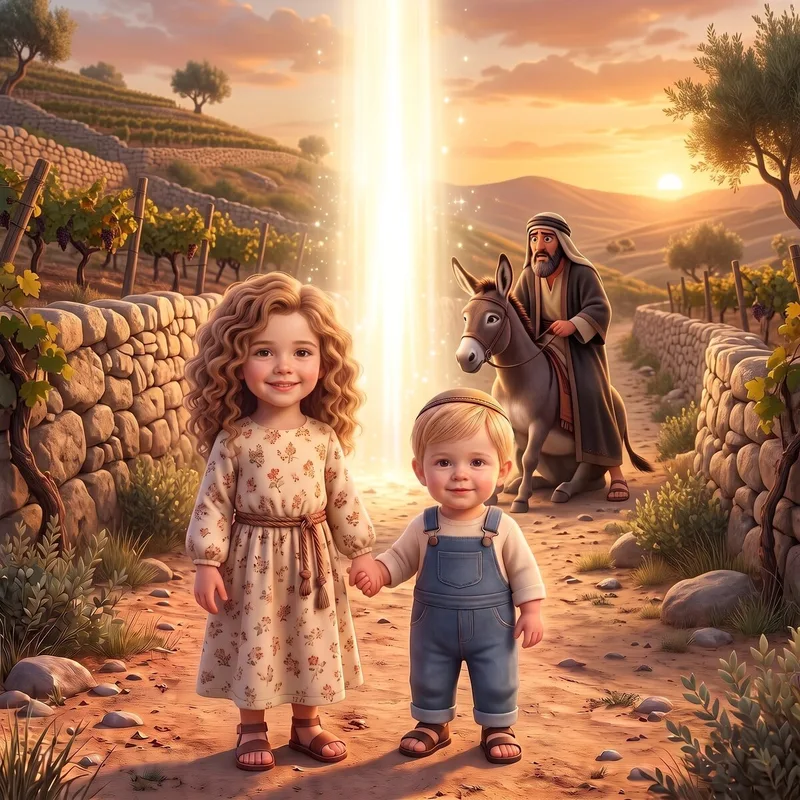
Create this book for your child
Parshas Balak is the parsha where a king hires a famous speaker to curse Bnei Yisrael, and Hashem turns every curse into a bracha. Children love it for Bilam's talking donkey, and parents value it because underneath the humor is a clear message: Hashem protects His people, and words only do what He allows. It is the seventh parsha in Sefer Bamidbar and it follows Parshas Chukas.
What happens in Parshas Balak?
Balak ben Tzippor, king of Moav, saw what Bnei Yisrael had done to the Emori, and Moav was terrified of the people. He sent the elders of Moav and Midyan to Bilam ben Be'or, asking him to come and curse the nation. Balak said that whoever Bilam blesses is blessed, and whoever he curses is cursed.
Bilam asked the messengers to stay the night, and Hashem told him clearly: do not go with them and do not curse the people, for they are blessed. Bilam sent the messengers home. Balak sent more distinguished officers with a bigger offer. Bilam answered that even a house full of silver and gold could not make him go beyond the word of Hashem, and then he asked them to stay one more night. This time Hashem allowed him to go, but only to speak what Hashem would tell him. Chazal learn from here that a person is led in the way he wants to go.
Why did Bilam's donkey talk, and what did she see?
On the road, a malach of Hashem stood in the way with his sword drawn. Bilam's donkey saw him, and Bilam did not. She turned into a field, and Bilam struck her. On a path between vineyards, with a wall on each side, she pressed against the wall and squeezed Bilam's foot, and he struck her again. In a narrow place where there was no room to turn, she lay down under him, and Bilam struck her with his staff.
Then Hashem opened the donkey's mouth. She asked what she had done to deserve three blows, and she reminded Bilam that she had carried him all his life and had never acted this way before. Then Hashem opened Bilam's eyes, and he saw the malach and bowed. The malach asked why he had struck his donkey and told him she had turned away from the road because of him. Bilam admitted that he had sinned, and he was told to go on, but to speak only the words Hashem would give him.
The Mishnah in Pirkei Avos (5:6) lists the mouth of the donkey among ten things created on Erev Shabbos at twilight. The Torah says the donkey was struck shalosh regalim, and Rashi explains that this was a hint: Bilam wanted to uproot a nation that celebrates three regalim each year.
How did Bilam's curses become brachos?
Bilam met Balak at the border of Moav. Balak took him to three different places from which to look at the people. At each one Bilam had seven mizbechos built and offered a bull and a ram on each. Each time Hashem put the words in Bilam's mouth, and only brachos came out. The first time Bilam said, in effect, how can I curse the ones whom Keil has not cursed? Balak told him, after the third time, that he had called him to curse his enemies and instead he had blessed them three times.
The third time, Bilam saw Bnei Yisrael camped tribe by tribe, and he said Mah tovu ohalecha Yaakov, mishkenosecha Yisrael, how good are your tents, Yaakov, your dwelling places, Yisrael. Rashi explains that he saw that the openings of their tents did not face one another, so that no one could look into his neighbor's tent. Many of us say these words, Mah Tovu, when we enter shul in the morning.
The Torah itself reminds Yidden, in Devarim 23:6, that Hashem refused to listen to Bilam and turned the curse into a bracha for them, because He loves them. Toward the end of the parsha the Torah turns to a painful sin of Bnei Yisrael at Shittim and Pinchas's response, which continues into the next parsha, Pinchas. For young children, it is perfectly fine to stop at Bilam's brachos.
What is the lesson of Parshas Balak for kids?
The first lesson is that Hashem watches over Bnei Yisrael. The Torah tells us what happened far from their camp, and every plan against them ended in a bracha. A child can take from this that Hashem is looking after us even when we do not see how.
The second is the power of a good eye. The Mishnah in Avos (5:19) says that students of Avraham Avinu have a good eye, a humble spirit and a modest soul, while students of Bilam have an evil eye, a haughty spirit and a greedy soul. Children can practice looking for what is good in a friend or a sibling.
The third is kindness to animals. The malach asks Bilam why he struck his donkey three times, and we learn from this that how we treat animals matters. Our article on being kind to animals is a good place to continue.
How do I explain Parshas Balak to a 3-year-old, a 6-year-old and a 10-year-old?
For a 3-year-old: keep it short and simple. A king was afraid of Bnei Yisrael and asked a man named Bilam to say bad words about them. A donkey saw a malach, and Bilam did not. Hashem put only good words in Bilam's mouth. Then sing or say Mah Tovu together.
For a 6-year-old: add the three times the donkey turned and the three times Bilam struck her, and ask who saw the malach first. Explain that Bilam wanted to curse, but Hashem would not let him, and that Hashem is always watching over us.
For a 10-year-old: bring in the deeper questions. Why did Hashem first say no and then allow Bilam to go? What do the three regalim in Rashi teach? What does the Mishnah in Avos say about a good eye and an evil eye? Why are tents with openings that do not face each other worth a bracha?
What questions can we ask at the Shabbos table about Parshas Balak?
Here are five questions for talking, with no need for anything but the table and the family:
- Who saw the malach first, Bilam or his donkey? Why do you think that was?
- What did Balak want Bilam to say about Bnei Yisrael, and what did Hashem put in Bilam's mouth instead?
- What did the donkey do for Bilam, and how can we treat animals the way they deserve?
- Why do we say Mah Tovu when we enter shul?
- How can we choose words that are brachos for the people around us?
What is a personalized Parshas Balak book like?
A Torah Tale book of this parsha puts your child's name and likeness, from one uploaded photo, on every page, in high-resolution 3D animated-film style. Up to eight siblings, ages 0 to 18, can appear in the same book. The book is written with careful rabbinical guidance and strict tznius, and reviewed by our team before it goes to print. Customers do not preview or approve the book or cover before printing.
Every book ends with a discussion page of ten questions that mix comprehension with middos, so it turns from a book read to a child into one talked about at the table. Every book also has a closing family page, and if you add parents and grandparents, they appear there with the children in every format. Softcover and hardcover open with a dedication page. Reading it at the Shabbos table is entirely appropriate.

Softcover 8″×8″

Hardcover 8″×8″

Board book 6″×6″

Coloring book 8.5″×11″
There are three formats: a 6x6 board book with rounded safety corners for ages 0-4, which suits a three-year-old, an 8x8 softcover for ages 4-8, and an 8x8 hardcover for ages 5-18. An optional matching coloring book, 8.5x11 in black-and-white line art, can be added to a one-time order. It is a weekday activity, for an afternoon during the week or erev Shabbos, and never for Shabbos or Yom Tov.
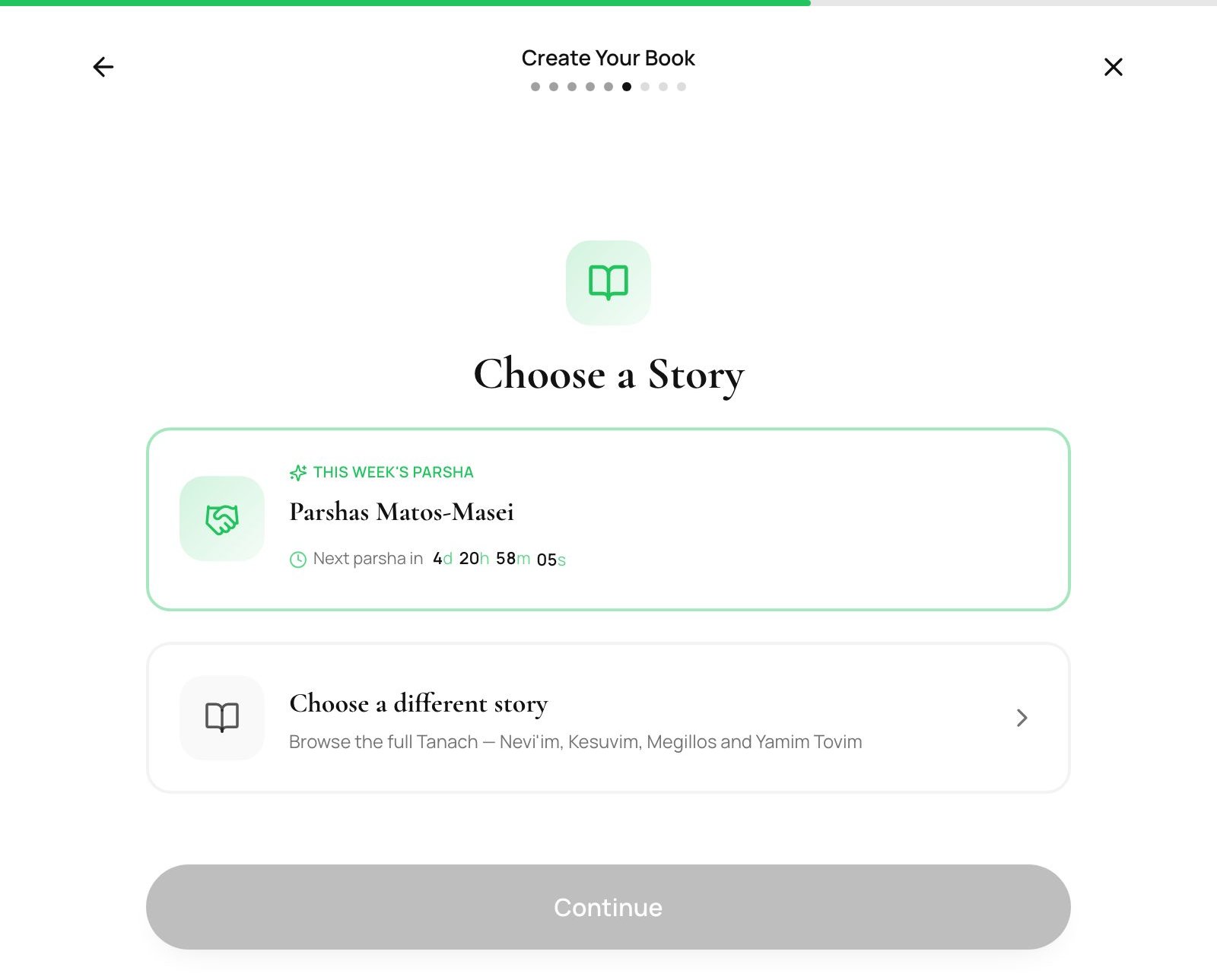
The book creator suggests the first parsha that can still arrive before its Shabbos, usually two to three weeks out, with a live countdown to that parsha's order deadline. To make a book of Parshas Balak, choose it in the story picker. In a year when Chukas and Balak are read together, a double-parsha week produces one book covering both. For help choosing, see how to choose the weekly parsha for your child's book.
Ready to start? Create the book with a free account and a few short questions: each child's name, boy or girl, age and one photo, any siblings, the story, your community (asked once), the language and the format. It takes about five minutes.
Frequently asked questions
What is Parshas Balak about?
Balak, king of Moav, was frightened of Bnei Yisrael and sent for Bilam ben Be'or to curse them. Hashem would not allow it, and each time Bilam opened his mouth, only brachos came out. Along the way, Bilam's donkey sees a malach that Bilam does not, and Hashem opens her mouth to speak.
Why did Bilam's donkey speak?
The Torah tells us that Hashem opened the donkey's mouth (Bamidbar 22:28) after Bilam struck her three times, though she had turned away because she saw the malach standing in the road. The Mishnah in Pirkei Avos (5:6) lists the mouth of the donkey among the ten things created on Erev Shabbos at twilight. The donkey's words also showed Bilam that she had served him faithfully all his life.
What is the lesson of Parshas Balak for kids?
Hashem watches over Bnei Yisrael, and no one's words can harm them unless Hashem allows it. Children can also learn to look at others with a good eye, as the Mishnah in Avos (5:19) describes the students of Avraham Avinu, and to treat animals with kindness. Bilam's own words, Mah Tovu, became part of our tefillah.
How do I explain Parshas Balak to a 4-year-old?
Keep it to three simple parts: a king was afraid of Bnei Yisrael and asked a man named Bilam to say bad words about them, a donkey saw a malach and Bilam did not, and Hashem put only good words in Bilam's mouth. You can end with Mah Tovu and tell your child that these good words are in our tefillah. Leave out the last section of the parsha and stop at the brachos.
Is there a personalized Parshas Balak book for children?
Yes. Torah Tale makes a personalized book of the parsha that you can choose in the story picker from the Torah collection, with your child's name and likeness on every page in 3D animated-film style. The formats are a 6x6 board book with rounded safety corners for ages 0-4, an 8x8 softcover for ages 4-8, and an 8x8 hardcover for ages 5-18. Every book ends with a discussion page of ten questions about the story.