Our Family Trip to Eretz Yisrael for Kids: Teaching What the Land Means
A parent's guide to Our Family Trip to Eretz Yisrael: what the Torah says about the land, how to explain it to a 4-year-old, a 7-year-old and an 11-year-old, and questions for the Shabbos table.
Published by Torah Tale.
Create this book for your child
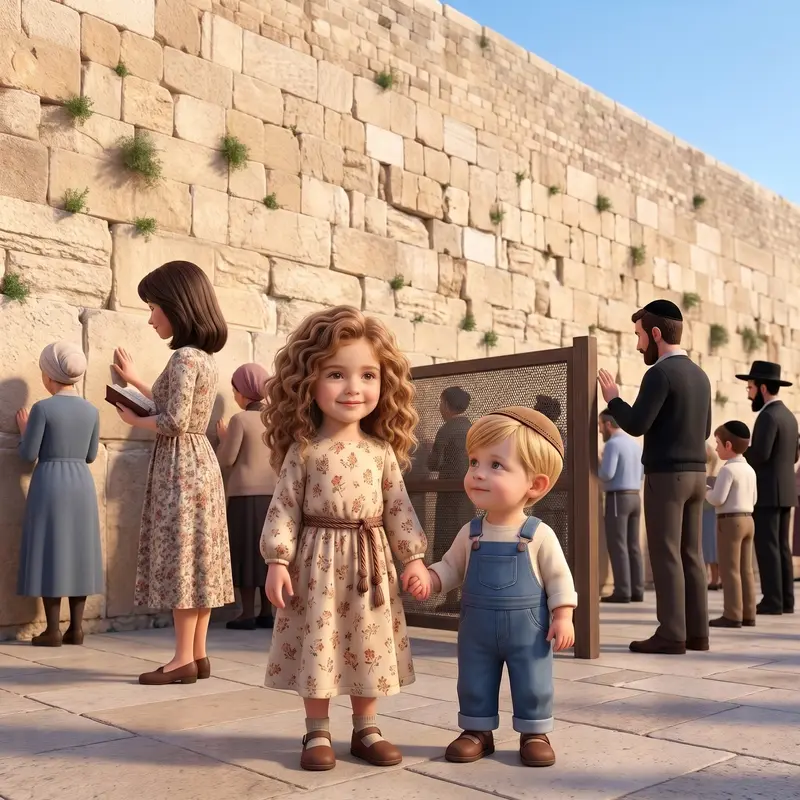
Our Family Trip to Eretz Yisrael is a personalized Torah Tale storybook in the Family collection, starring your child together with the family that travels with them. It lands with children because they hear about Eretz Yisrael all the time, in bentching and in tefillah, and this story lets them picture going there with the people they love.
What is Our Family Trip to Eretz Yisrael about?
The title gives the shape of the story: a child, a family, and a journey to Eretz Yisrael. Like the rest of the Family collection, it is built around a child and the grown-ups who love them, and around what those grown-ups do together and what they teach.
Your child's name and likeness, made from the one photo you upload, appear on every page in 3D animated-film style. If you add parents and grandparents with their photos, they appear with the children on a closing family page, in every format.
Why is Eretz Yisrael so special to Yidden?
It helps to have a few pesukim ready, because children ask "why this land?" more often than parents expect. The Torah tells us that Hashem's first words to Avraham Avinu were to go to the land He would show him, and that Hashem promised that land to Avraham's children (Bereishis 12:1 and 12:7).
The Torah describes it as a good and wide land flowing with milk and honey (Shemos 3:8). In Devarim (11:12) it calls it a land that Hashem looks after constantly, from the beginning of the year to the end of the year.
This is also why we mention the land in our daily life. In bentching we thank Hashem for the land, and in tefillah we ask for Yerushalayim. A child who has heard those words every day will recognize them when the family sets out.
What is the lesson of a family trip to Eretz Yisrael?
The simplest lesson is that Eretz Yisrael matters to the whole family, not only to the grown-ups. When a child sees Mommy, Totty and grandparents treat the trip as a real mitzvah-minded occasion, the child learns what the family values.
We can draw several middos from this. One is hakaras hatov, thanking Hashem for the chance to visit. Another is ahavas Eretz Yisrael, loving the land the Torah speaks of so warmly. A third is passing things down, because what a parent or grandparent shows a child is what the child carries.
It also connects to the parshiyos children already know. In Parshas Vayeitzei, Yaakov leaves the land and Hashem promises to bring him back to it (Bereishis 28:15). Your child can see that the longing to be in Eretz Yisrael is an old and precious one.
How do I explain it to a 4-year-old, a 7-year-old and an 11-year-old?
- Ages 3-4: Use one sentence and repeat it: "Eretz Yisrael is the special land Hashem gave to the Yidden, and our family is going to visit." Point to the words you already say in bentching and let the child join in.
- Ages 6-7: Tell about Avraham Avinu, who set out to the land Hashem showed him, and about Hashem's promise to his children. Ask, "What would you want to say thank you for when we get there?"
- Ages 10-12: Talk about the mitzvos connected to the land, such as shmita, and how the family can honor the trip. If your trip involves travel questions, such as which brachos or tefillos apply to a journey or a flight, ask your rav.
A one-sentence script for any age: "We are going to Eretz Yisrael together, because Hashem gave this land to the Yidden and we want to be there."
What is the personalized book like?
It is a storybook, so it can be read at bedtime, on a long afternoon, or at the Shabbos table. Softcover and hardcover books open with a dedication page, and every format ends with the family page and a dedicated discussion page of 10 questions mixing comprehension with middos. That page turns the book from something read to a child into something the family talks about together.

Softcover 8″×8″

Hardcover 8″×8″

Board book 6″×6″

Coloring book 8.5″×11″
The formats are a 6x6 board book with rounded safety corners (ages 0-4), an 8x8 softcover (ages 4-8) and an 8x8 hardcover (ages 5-18). An optional matching coloring book (8.5x11, black-and-white line art) can be added. Books can be ordered in English, Hebrew or Yiddish. Siblings can share one book, with up to eight children from ages 0 to 18.
Creating the book takes about five minutes. You make a free account and answer a few short questions: each child's name, boy or girl, age and photo, any siblings, the story, your community (asked once), the language and the format. Every book is written with careful rabbinical guidance and strict tznius and is reviewed by our team before it goes to print.
What can we ask at the Shabbos table?
These are talking questions only, so they work at the Shabbos table and on Yom Tov. Pick one or two and let the grown-ups answer too.
- Why does our family want to go to Eretz Yisrael?
- What did Hashem promise Avraham Avinu about the land?
- Which words about Yerushalayim do we say in bentching and in tefillah?
- What would you like to thank Hashem for when we are there?
- Which grown-up in our family can tell us about their own trip, and what did it teach them?
If your grandparents are at the table, this is a good moment for them to tell a story from their own life. That is exactly the kind of handing down this collection is about. Our book Bobby and Zaidy and Me covers that bond on its own.
What can we do before or after the trip?
Weekday afternoons are good for preparing. Look together at a map and find where you will be, or let your child help choose what to pack. The optional coloring book is also a weekday activity, best for erev Shabbos, a weekday afternoon or Chol HaMoed.
After the trip, read the book again and ask what is the same and what is different from the real thing. Children enjoy seeing how a story matches what they remember, and it keeps the trip alive in the family's conversation.
Ready to make it? You can create the book in about five minutes and choose Our Family Trip to Eretz Yisrael from the Family category in the story picker.
Frequently asked questions
What is Our Family Trip to Eretz Yisrael about?
It is a personalized Torah Tale storybook in the Family collection about a child and a family journeying to Eretz Yisrael. Your child is the hero, with their name and likeness on every page. Like the other books in the collection, it is about what a family does together and what the grown-ups teach.
How do I explain Eretz Yisrael to a 4-year-old?
Keep it to one simple sentence: Eretz Yisrael is the special land Hashem gave to the Yidden, and our family is going to visit it. Young children do best with concrete, familiar links, such as the pictures of Yerushalayim they may know and the way we mention the land in bentching. You can add one more small idea each time you read.
What does the Torah say about Eretz Yisrael?
The Torah tells us that Hashem told Avraham Avinu to go to the land He would show him, and that Hashem promised that land to Avraham's children. It describes the land as good and wide, flowing with milk and honey, and says it is a land Hashem looks after constantly, from the beginning of the year to its end.
Is the book suitable if our family is not traveling to Eretz Yisrael?
Yes. It can be read by a family that is preparing for a trip, one that has just returned, or one that simply wants children to feel close to Eretz Yisrael. The discussion page and the Shabbos-table questions work the same way in every case.
Which format should I choose for my child?
The board book (6x6, rounded safety corners) is for ages 0-4, the softcover (8x8) for ages 4-8 and the hardcover (8x8) for ages 5-18. The child's age is one of the short questions when you create the book. An optional matching coloring book can be added as a weekday activity.
Can we read the book on Shabbos?
Yes, reading a storybook is entirely appropriate on Shabbos and Yom Tov, whether at the table or on a quiet afternoon. Talking, singing and discussion questions fit the day well. The optional coloring book is a weekday activity, for a weekday afternoon, erev Shabbos or Chol HaMoed.