My Twin and Me (התאום שלי ואני) for Kids: Twins, Family & Being Yourself
A parent's guide to My Twin and Me: what the book is, the Torah lens on twins, how to explain it to a 3-4-year-old, a 6-7-year-old and a 9-12-year-old, and which format fits.
Published by Torah Tale.
Create this book for your child
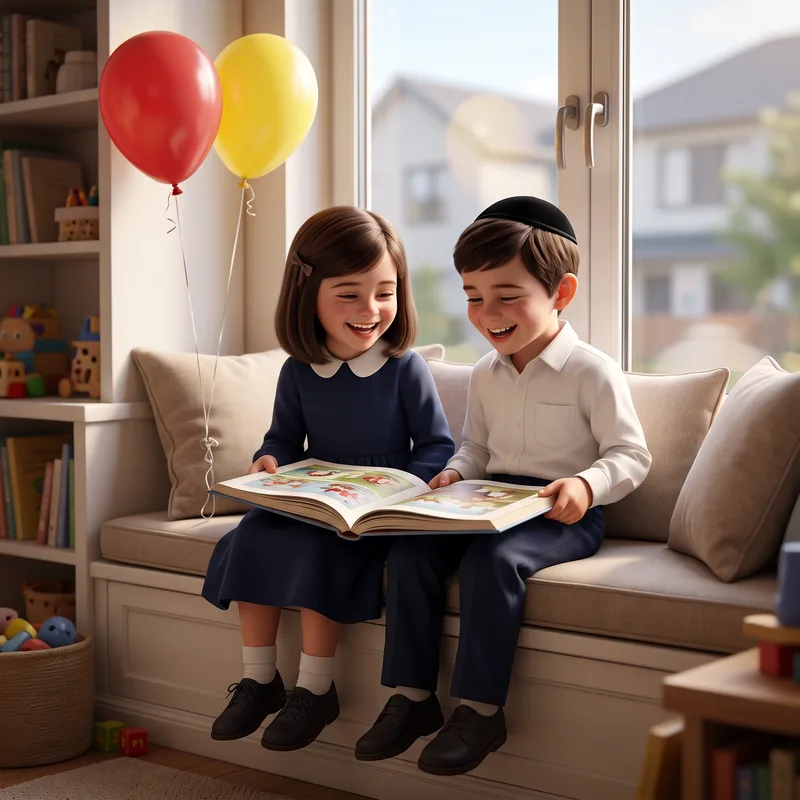
My Twin and Me is a story from the Torah Tale Family collection, which is set at home today, and it stars two children who are twins. It works for children because they see both sides of living with a twin: the closeness, and the fact that each twin is still a separate person. In a personalized Torah Tale book, both twins are the heroes, each with their own name and likeness.
What is the My Twin and Me story about?
The Family collection is about a child and the grown-ups and family who love them, at home, in the present day. My Twin and Me looks at that same home life through the eyes of twins. Both children appear in the book, with their name and likeness on every page, so neither twin is the main character while the other is a bystander.
Rather than a plot summary, here is what a parent deciding on this book can count on:
- Both twins are the heroes, illustrated in 3D animated-film style from a photo of each child.
- The book ends with a discussion page of 10 questions mixing comprehension with middos.
- If you add parents, grandparents and other relatives with their photos, they appear with the children on a closing family page, in every format.
- Softcover and hardcover books open with a dedication page.
What is the lesson of a twin story?
There are two lessons that go together. The first is being on the same team: twins share a home, a table and a lot of days, and the book gives them something to enjoy together. The second is being yourself: sharing a birthday does not make two children the same child.
The best-known twins in the Torah are Yaakov and Eisav, whose birth and childhood are told in Parshas Toldos. Rashi (Bereishis 25:27), bringing Chazal, explains that while the boys were small their deeds were not examined, and at thirteen the difference between them showed. We do not read this as a warning about twins. Parents often take it as a reminder that two children raised in one home are each walking their own path.
Mishlei (22:6) says chanoch la'naar al pi darko, "חֲנֹךְ לַנַּעַר עַל פִּי דַרְכּוֹ". It is a natural thought to keep in mind with twins, who are so often described as one unit. For a book about the wider circle of family, see My Cousins.
How do I explain it to a 3-4-year-old, a 6-7-year-old and a 9-12-year-old?
- Ages 3-4: Keep it to one sentence: "You and your twin are together in one family, and each of you is you." Let them find themselves and their twin in the pictures and say what each one loves.
- Ages 6-7: Ask what their twin likes that they do not, and what they like that their twin does not. Then say that Hashem gave each child different strengths, even children born on the same day.
- Ages 9-12: Tell them about Yaakov and Eisav and Rashi's comment on vayigdelu hane'arim. Then talk about being compared: what does it feel like, and how can twins cheer for each other instead of competing?
If you want a single line for any age: Hashem gave you a twin to share life with, and gave each of you your own path.
What is a personalized My Twin and Me book like?
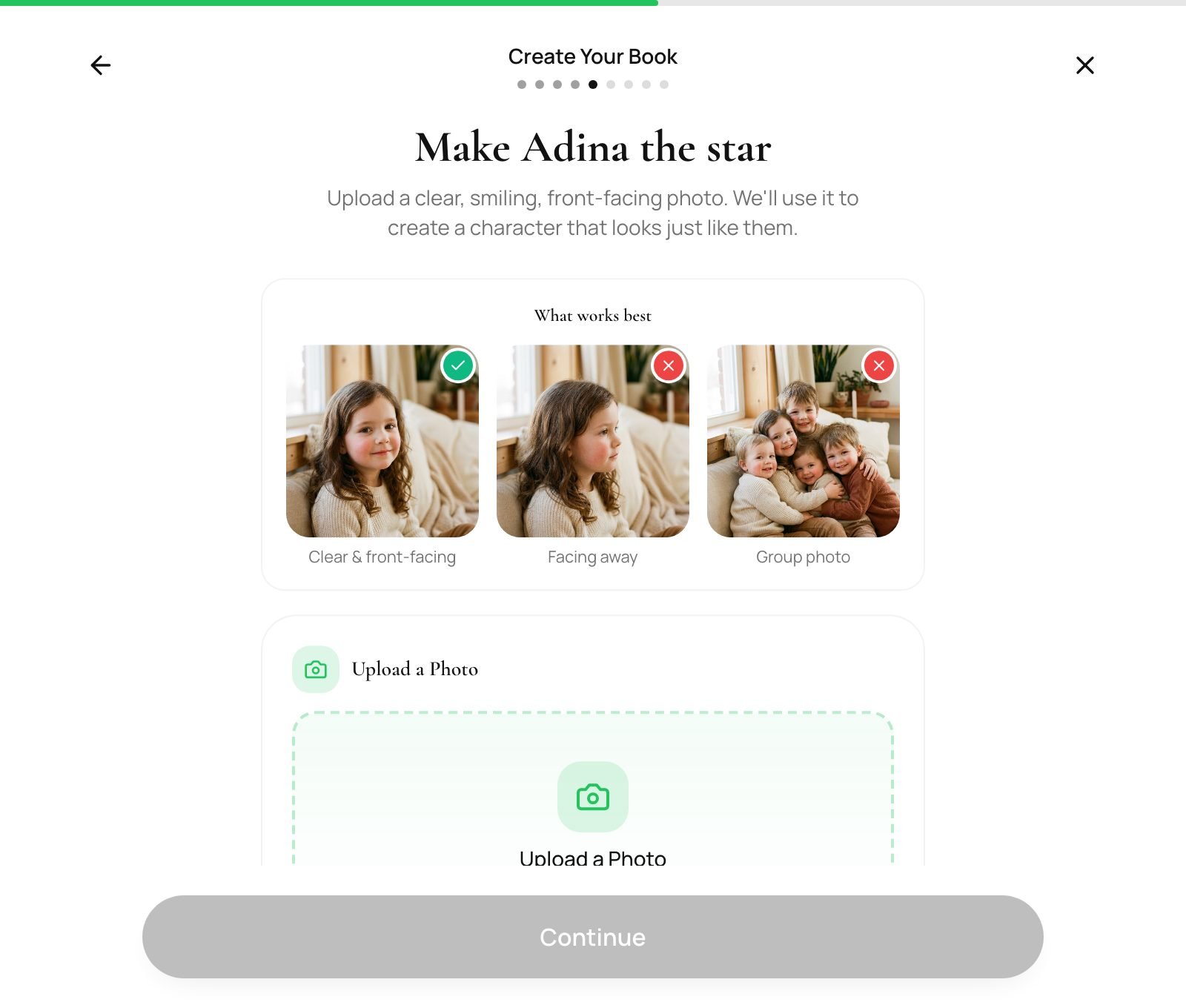
Creating the book takes about five minutes at torahtale.com/create. You open a free account and answer a few short questions: each child's name, boy or girl, age and one photo, any other siblings, the story, your family's community (asked once), the language and the printed format. For twins, that means entering two children, and each twin needs a photo of their own.
Up to eight children can be in one book, so a younger or older sibling can join the twins. The book can be ordered in English, Hebrew or Yiddish, and a book can be ordered in more than one language. Every book is written with careful rabbinical guidance and strict tznius, and reviewed by our team before it goes to print.
Which format is right for twins?

Softcover 8″×8″

Hardcover 8″×8″

Board book 6″×6″

Coloring book 8.5″×11″
Because twins share an age, choosing is simple:
- Board book, 6x6 with rounded safety corners: ages 0-4.
- Softcover photo book, 8x8: ages 4-8.
- Hardcover photo book, 8x8: ages 5-18.
At age 4 either the board book or the softcover fits, and at age 5 either the softcover or the hardcover. An optional matching coloring book (8.5x11, black-and-white line art) can be added as a one-time extra. Coloring is melacha, so it is a weekday activity: erev Shabbos, a weekday afternoon, the days before a Yom Tov or Chol HaMoed. It is never for Shabbos or Yom Tov. The storybook itself is the opposite, and reading it on Shabbos or a long Yom Tov afternoon is just right.
What questions can we ask at the Shabbos table?
Reading a book at the Shabbos table is a good use of the time, and these questions need only talking. They work alongside the 10 questions printed at the end of the book. For more on Shabbos at home, see Shabbos with My Family.
- What is the best thing about having a twin?
- What is something your twin is better at than you, and how can you say so out loud?
- What is something you do differently from your twin, and why is that a good thing?
- When did your twin help you this week?
- Yaakov and Eisav were twins who grew up to be very different. How can brothers or sisters who are different still be good to each other?
- What can each of you do this Shabbos to make the other one's day better?
If you have twins at home, or know a family who does, a book that puts both of them on every page is a gift each of them can call their own. When you are ready, create the book and choose My Twin and Me from the Family collection.
Frequently asked questions
What is the My Twin and Me story about?
My Twin and Me is a story in the Torah Tale Family collection, which is set at home today and is about a child and the people closest to them. This one stars two twins, and both children appear in the book with their own names and likenesses. Like every Torah Tale book, it ends with a discussion page of 10 questions.
How do I explain being a twin to a 4-year-old?
Keep it to one simple idea: you and your twin are together in one family, and each of you is also your own person. Point to each child in the pictures and name one thing each of them loves. At this age a short sentence repeated warmly works better than an explanation.
Can both twins be in the same personalized book?
Yes. Up to eight children, ages 0 to 18, can appear in the same Torah Tale book. For each child you enter a name, boy or girl, age and one photo, so each twin needs their own photo.
Which format should I choose for twins?
Choose by the twins' age, since they share it. The board book (6x6, rounded safety corners) is for ages 0-4, the softcover (8x8) for ages 4-8, and the hardcover (8x8) for ages 5-18. At age 4 either the board book or the softcover fits, and at age 5 either the softcover or the hardcover.
Is there a Torah source about twins?
Yes. Yaakov and Eisav were twins, and their birth and growing up are told in Parshas Toldos (Bereishis 25). Rashi, bringing Chazal, explains on 25:27 that while they were small their different paths were not yet seen, and that by age thirteen they were. Parents often use this as a reminder that even children born together each walk their own path.
Can we read the book on Shabbos?
Yes, reading a storybook is entirely appropriate on Shabbos and Yom Tov, and the discussion questions can be talked through at the table. The optional coloring book is different: coloring is melacha, so it is for a weekday, such as erev Shabbos, a weekday afternoon or Chol HaMoed, and never for Shabbos or Yom Tov.