My New Baby Sister (אחות קטנה חדשה) for Kids: Welcoming a Baby Girl at Home
A new baby sister changes the whole house. Here is how to talk about it with your child, what Moshe's sister Miriam teaches a big brother or sister, and what a personalized Torah Tale book of this story is like.
Published by Torah Tale.
Create this book for your child
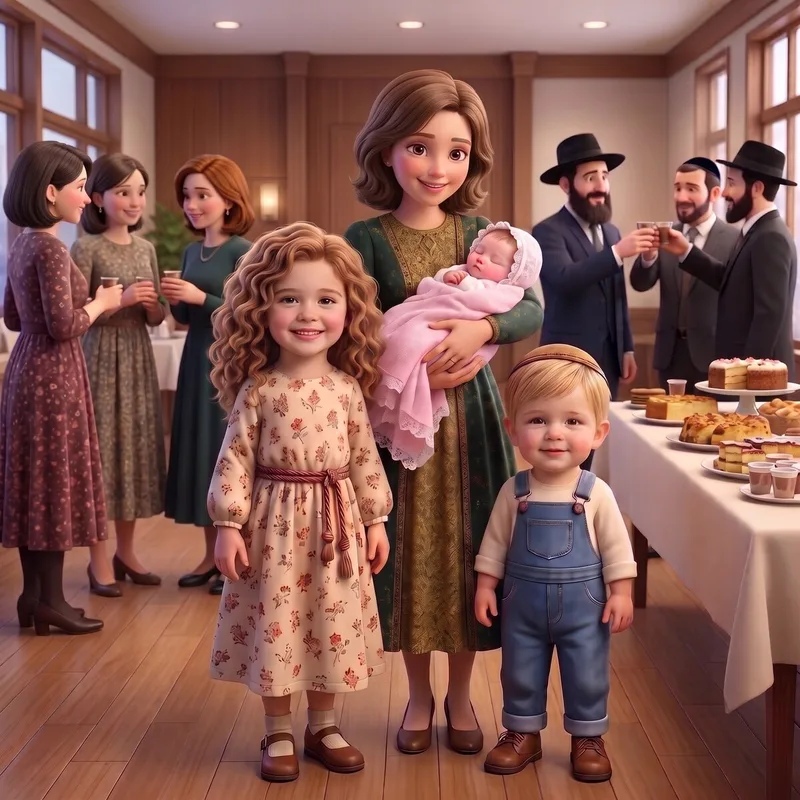
My New Baby Sister (אחות קטנה חדשה) is a Family story about welcoming a baby girl into the home, told with the child at the center and the grown-ups who love them close by. It lands with children because a new baby is one of the biggest changes a young child lives through, and the story gives them a way to talk about it.
What is the My New Baby Sister story about?
The Family collection is about a child and the grown-ups who love them: Mommy, Totty and the grandparents. The stories are set at home today and show what they do together and what a parent or grandparent teaches. This one is about the arrival of a baby sister and the child's place in the family when she comes.
It is not a story about a far-off event. It is about the kitchen, the Shabbos table and the new person in the house, which is why a child can recognize their own life in it.
What does a new baby teach a big brother or sister?
A new baby calls for several middos at once: chesed in the small things, patience when Mommy is busy with the baby, and sharing the attention of the people the child loves. None of these is easy for a small child, and it helps to name them plainly.
The Torah gives us a real picture of an older sibling watching over a baby. When Moshe was placed in the river, the pasuk says his sister stood at a distance to know what would be done to him (Shemos 2:4). Later she spoke to Pharaoh's daughter about finding a nursemaid for him (2:7). You can tell your child that Moshe's sister Miriam looked out for her baby brother, and that a big brother or sister can do the same in the ways a child can. You can read more of that setting in Parshas Shemos for Kids.
How do I explain a new baby sister to a 3-year-old, a 6-year-old and a 9-year-old?
The words change with the age. The message does not: you are loved, the baby is part of our family, and you matter to her.
- Around 3: Keep it short and physical. "The baby is small and needs Mommy a lot. You are still my big girl or my big boy, and I love you." Offer a safe, simple job, such as picking a book to read next to the baby.
- Around 6: Name the feelings. "Sometimes it is hard to wait when Mommy is busy with the baby. That is normal. What could we do together while we wait?" Children this age can understand that a baby cannot do things yet.
- Around 9: Talk about what they can give. A baby sister will learn from watching her older sibling, and that is a real responsibility. Ask how they would like to help, and listen to the answer.
Whatever the age, make a little time that is only for the older child, and say clearly that it is theirs.
Is it normal for a child to feel jealous of the baby?
It is common for a child to have mixed feelings when a baby arrives, and it does not mean something has gone wrong. A child who says "I don't like the baby" is usually saying "I miss you." Respond to the feeling first and the behavior second.
A book helps because the child does not have to explain their own feelings. They can point at a page and say, "That's like me." If you have a baby brother at home as well, the same ideas appear in My New Baby Brother.

Softcover 8″×8″

Hardcover 8″×8″

Board book 6″×6″

Coloring book 8.5″×11″
What is a personalized Torah Tale book of this story like?
In a Torah Tale book your child is the hero. Their name and, from one uploaded photo, their likeness appear on every page, illustrated in high-resolution 3D animated-film style. Up to eight children can appear in the same book, ages 0 to 18, so the baby sister can be in it alongside her big brother or sister.
You can also add parents, grandparents and other relatives with their photos. The story itself stars the children, and the grown-ups you add appear with them on a closing family page in every format. The softcover and hardcover open with a dedication page, which is a nice place to write a few words for the new big brother or sister.
Every book is written with careful rabbinical guidance and strict tznius, and is reviewed by our team before it goes to print.
Which format fits a big brother or sister?
Choose by the older child's age. The board book, 6x6 with rounded safety corners, is for ages 0-4, and it suits a toddler who will handle it a great deal. The softcover, 8x8, is for ages 4-8, and the hardcover, 8x8, is for ages 5-18.
An optional matching coloring book (8.5x11, black-and-white line art) can be added to a book. It is a weekday activity only, for a weekday afternoon or erev Shabbos, never for Shabbos or Yom Tov. The storybook itself is different: reading it at the Shabbos table or on a long Yom Tov afternoon is just right.
What questions can I ask at the Shabbos table about the new baby?
Every Torah Tale book ends with a discussion page of 10 questions that mix comprehension with middos: what happened, and what it asks of the child. That page turns the book from something read to a child into something the family talks about at the table. Here are a few extra questions of your own, which need nothing but conversation:
- What is something you can do to make our baby sister smile?
- When it is hard to wait for Mommy, what can you do?
- What did Miriam do when Moshe was a baby in the river?
- What is something only a big brother or sister can teach her?
- How do the grandparents feel about having a new granddaughter?
Let the child answer first and do not correct. If grandparents are at the table, let them share what they remember about welcoming a new baby. You can see how the grandparent relationship is told in our grandparents story.
How do we welcome a baby girl in a Jewish home?
How a baby girl is named and welcomed varies by family and community, so ask your rav what is customary for you. Whatever you do, include the older children: let them see the guests, the food and the simcha, and tell them it is for their sister and for the whole family.
When you are ready, you can create the book. It takes a free account and a few short questions: each child's name, boy or girl, age and one photo, any siblings, the story, your community (asked once), the language and the format. The whole flow takes about five minutes, and the book is available in English, Hebrew and Yiddish.
Frequently asked questions
How do I prepare a young child for a new baby sister?
Keep it concrete and honest: tell your child a baby is coming, that the baby will need a lot of Mommy's time at first, and that your child will still be loved just as much. Read a story about it in advance and let your child ask questions. Give your child one small, safe job to look forward to, such as choosing a book to read near the baby.
What is the lesson of My New Baby Sister?
The lesson is that a new baby is a gift to the whole family and that a big brother or sister has a real place in welcoming her. The middos at the center are chesed, patience and sharing the grown-ups' attention. The discussion page at the end of the book carries 10 questions mixing comprehension with middos.
Can my new baby appear in the personalized book too?
Yes. Up to eight children, ages 0 to 18, can appear in the same Torah Tale book, each with a name and one uploaded photo. If you add parents and grandparents, they appear with the children on a closing family page in every format.
Which Torah Tale format suits a big brother or sister?
It depends on the older child's age. The board book (6x6 with rounded safety corners) is for ages 0-4, the softcover (8x8) for ages 4-8, and the hardcover (8x8) for ages 5-18. A matching coloring book is an optional add-on.
Is there a Torah source about an older sibling caring for a baby?
Yes. The Torah tells us that when Moshe was placed in the river as a baby, his sister Miriam stood at a distance to see what would happen to him (Shemos 2:4), and later spoke up to Pharaoh's daughter about finding a nursemaid (2:7). It is a good, simple example of an older sibling watching over a baby.