My Aunt and Uncle (הדודה והדוד שלי) for Kids: Family Beyond the Home
My Aunt and Uncle is a Family collection story about a child and the aunt and uncle who love them. Here is how to explain it to a 3 to 4 year old, a 6 to 7 year old and a 9 to 12 year old, plus questions for the table.
Published by Torah Tale.
Create this book for your child
My Aunt and Uncle (הדודה והדוד שלי) is a story in Torah Tale's Family collection, a collection about a child and the grown-ups who love them, set at home today. It lands with children because aunts and uncles are a special kind of grown-up: they are family, they are not Mommy or Totty, and they often have time and attention that feels like a gift. This guide helps you use the story to talk about that relationship.
We are not going to retell the book scene by scene here. Instead, this guide focuses on what the story is built to do and how to carry it from the page into your own family.
What is My Aunt and Uncle about?
The story belongs to the Family collection, whose stories show a child with the grown-ups who love them: what they do together and what a parent or grandparent teaches. Other books in the collection are about Mommy, Totty, and Bobby and Zaidy. This one turns to the aunt and uncle.
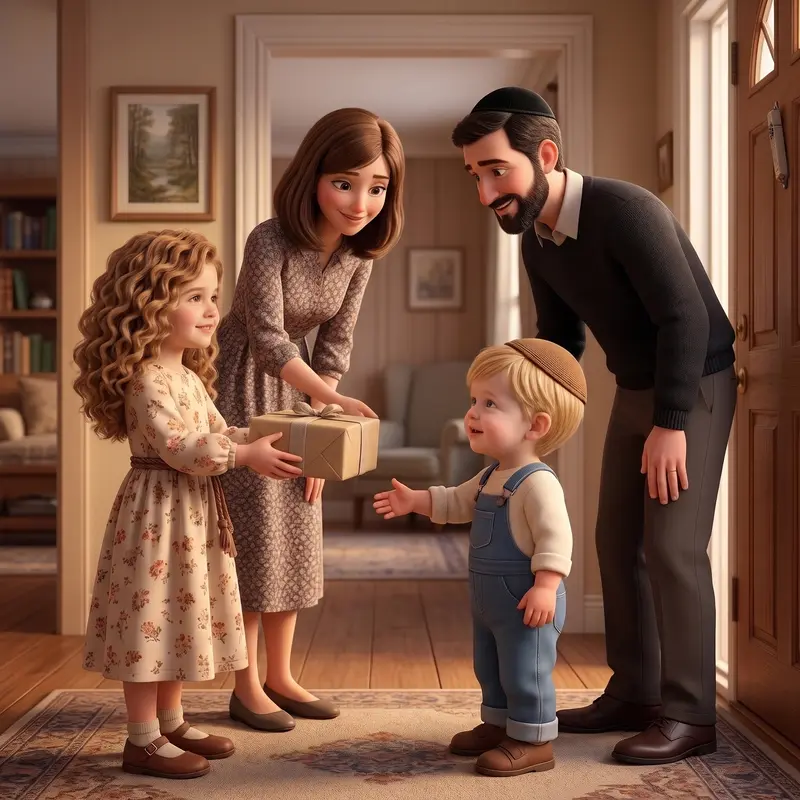
Your child is the hero. Their name and their likeness, taken from one uploaded photo, appear on every page, illustrated in 3D animated-film style. Reading it, a child sees themselves at the center of a warm family picture that includes more than the people who live in the house.
Why do aunts and uncles matter in a Jewish family?
The Torah itself pays attention to this relationship. When Avraham Avinu set out, Lot, the son of his brother, traveled with him. Later, when Lot was taken captive, the pasuk says that Avram heard that his relative was taken, and he went out with his trained men and brought back Lot and his possessions (Bereishis 14:12-16).
We learn from this that an uncle's love is meant to be active. Avraham did not wait to be asked. A child does not need the whole story at once, but the idea is a good one to plant: family members look out for each other.
For a younger sibling or cousin, the same idea can be seen at a smaller scale. If your family has cousins close in age, our article My Cousins goes into that side of the family.
What is the middah behind the story?
The Family collection is about the love that runs between a child and the grown-ups around them, and what those grown-ups teach by being present. For an aunt and uncle story, the middos that come to mind are appreciation (hakaras hatov), warmth in how we greet family, and respect for grown-ups who are not our parents.
Each book ends with a discussion page of 10 questions mixing comprehension with middos: what happened, and what it asks of the child. That page is where the middah becomes concrete for your own child. If the thank-you side of the story interests you, see Saying Thank You for Kids.
How do I explain aunts and uncles to a 3-year-old, a 6-year-old and a 10-year-old?
Ages 3 to 4. Keep it to who they are. "Your Aunt is Mommy's sister. Your Uncle is married to her." Point to a photo, say their names, and ask, "What do you like to do when they come?" Short and concrete works best.
Ages 6 to 7. Children this age enjoy working out the family tree. Ask who is whose brother or sister, and which aunts and uncles are from which side. Then ask what each one is good at or loves to do. This is also the age to talk about greeting them nicely and thanking them for a gift or a visit.
Ages 9 to 12. Older children can think about what a relationship needs. Ask, "How can you show an aunt or uncle that you appreciate them?" and "What have you learned from them?" A bar or bas mitzvah-age child can also begin to think about being the one who looks out for younger cousins, a little like Avraham for Lot.
What is the personalized book like?
You create it at torahtale.com/create with a free account and a few short questions: each child's name, boy or girl, age and one photo, any siblings, the story, your family's community (asked once), the language and the printed format. It takes about five minutes. Up to eight children, ages 0 to 18, can appear in the same book, and the language can be English, Hebrew or Yiddish.
You can also add parents, grandparents and other relatives with their photos. The story stars the children, and the grown-ups you add appear with them on a closing family page in every format. If you add your child's real aunt and uncle, they will see themselves there.

Softcover 8″×8″

Hardcover 8″×8″

Board book 6″×6″

Coloring book 8.5″×11″
The formats go by age. The 6x6 board book with rounded safety corners is for ages 0-4, the 8x8 softcover is for ages 4-8, and the 8x8 hardcover is for ages 5-18. Softcover and hardcover open with a dedication page, a good spot for a few words from the aunt and uncle. Every book is written with careful rabbinical guidance and strict tznius, and is reviewed by our team before it goes to print.
What questions can we ask at the Shabbos table?
Reading is entirely right for Shabbos, and so are talking and questions. These work well after reading the book, or on their own:
- What is your favorite thing about your aunt and uncle?
- What is something you learned from an aunt or uncle?
- How do we greet someone who comes to our home?
- What can you do to make an aunt or uncle feel appreciated?
- Why did Avraham go out to help Lot?
- Who in our family could use a visit or a kind word this week?
Adults can join in with their own stories of aunts and uncles from when they were children. Children often love hearing that Mommy or Totty once had an aunt who did something funny or kind. For a related Shabbos-table book, see Shabbos with My Family.
What can we do with this story during the week?
On a weekday, you can plan something for the real aunt and uncle: a phone call, a visit, or a thank-you note your child writes with your help. Writing is melacha, so keep it for a weekday or erev Shabbos, never Shabbos or Yom Tov.
The optional matching coloring book (8.5"x11", black-and-white line art) is also a weekday activity, for an afternoon during the week or the days before a Yom Tov, and on Chol HaMoed it is permitted. It is a one-time add-on to a book, not a subscription.
Ready to make it for your child? Create the book in about five minutes, and add the aunt and uncle to the family page.
Frequently asked questions
What is the story My Aunt and Uncle about?
My Aunt and Uncle is a story from the Family collection, which is about a child and the grown-ups who love them, set at home today. It is about the aunt and uncle in a child's life and what a child shares with them. Your child is the hero, with their name and likeness in the illustrations.
What is the lesson of My Aunt and Uncle?
The lesson is that a child's family reaches beyond the people in the house, and that the grown-ups who love them have something to give and to teach. It invites a child to notice, appreciate and spend time with an aunt and uncle. The discussion page at the end of the book asks 10 questions mixing what happened with what it asks of the child.
How do I explain aunts and uncles to a 4-year-old?
Keep it concrete and short: an aunt or uncle is Mommy's or Totty's sister or brother, and they love you very much. Name your child's own aunts and uncles, say how they are related, and ask what the child likes to do with them. A simple picture book is easier to follow at this age than an explanation.
Can my child's real aunt and uncle appear in the book?
Yes, you can add parents, grandparents and other relatives with their photos while creating the book. The story itself stars the children, and the grown-ups you add appear with them on a closing family page, in every format.
Which format of My Aunt and Uncle is right for my child?
Choose by age. The 6x6 board book with rounded safety corners is for ages 0-4, the 8x8 softcover is for ages 4-8, and the 8x8 hardcover is for ages 5-18. Softcover and hardcover open with a dedication page, which is a nice place for a message from the aunt and uncle.
Can I read the book on Shabbos?
Yes, reading the storybook is appropriate on Shabbos and Yom Tov. The optional coloring book is different, because coloring is melacha, so keep it for a weekday or erev Shabbos.