Koheles for Kids: Shlomo HaMelech's Words, Havel Havalim & What Lasts
Koheles is a Megillah with no plot, only a wise king teaching what matters. Here is how to explain it to a child at ages 3-4, 6-7 and 9-12, with Shabbos-table questions.
Published by Torah Tale.
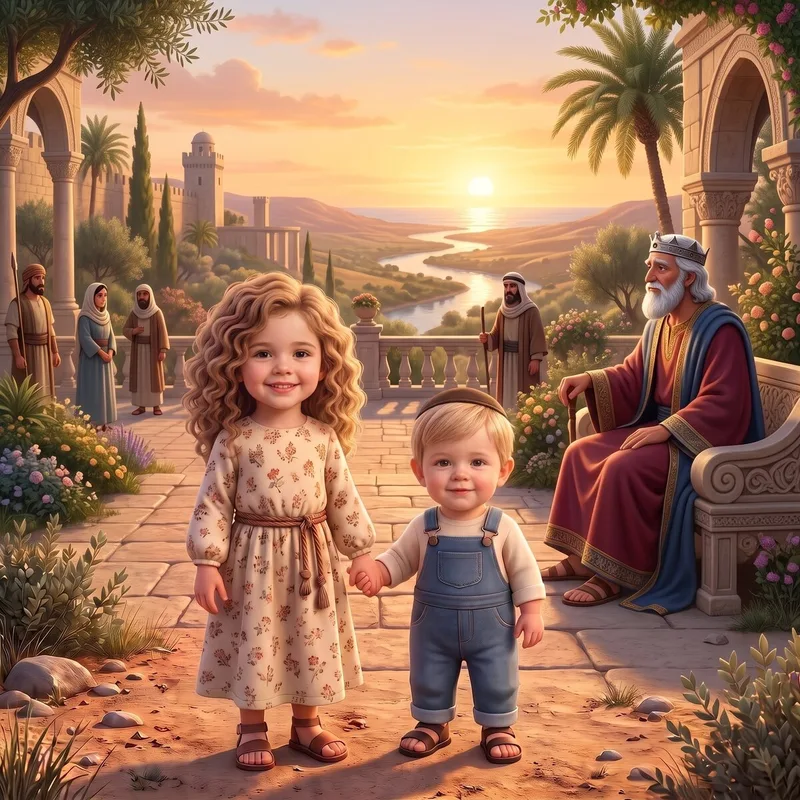
Create this book for your child
Koheles is one of the five Megillos in Kesuvim, the words of a wise king who calls himself Koheles ben Dovid, melech bi'Yerushalayim, and whom tradition identifies as Shlomo HaMelech. It has no plot, no villain and no rescue. It is a king teaching what matters in life and what does not, and children respond to it because it speaks in pictures they know: the sun, the wind, the rivers, friends and seasons.
What is Koheles, and who wrote it?
The very first pasuk introduces the author as divrei Koheles ben Dovid melech bi'Yerushalayim, the words of Koheles, son of Dovid, king in Yerushalayim. Tradition identifies him as Shlomo HaMelech, the king Hashem blessed with a listening heart. The name Koheles is connected to kahal, a gathering, as the meforshim explain.
Koheles is read on Sukkos. Your child may have heard it from the bimah or noticed it in the Megillos set at home. You can read more about Shlomo's wisdom in Shlomo HaMelech's Wisdom for Kids and about his other sefer in Sefer Mishlei for Kids.
What happens in Koheles? A retelling for children
Think of Koheles as a wise king taking you for a walk and pointing things out. He asks, Mah yisron la'adam b'chol amalo sheya'amol tachas hashamesh, what lasting gain does a person get from all his toil under the sun? Then he shows us the sun rising and setting, the wind going round, and the rivers flowing into a sea that never fills up.
Next comes one of the most loved pesukim: Lakol zman, v'eis l'chol chefetz tachas hashamayim. There is a time for everything under the heavens. A time to be quiet and a time to speak, a time to cry and a time to laugh, a time to build and a time to break down.
The king also teaches about people. Tovim hashenayim min ha'echad, two are better than one, because they help each other up. V'hachut hameshulash lo bimheira yinatek, a three-stranded cord is not quickly broken. And tov shem mishemen tov, a good name is better than good oil.
Throughout the sefer he encourages simcha, and he tells the young to remember their Creator in the days of their youth.
What does havel havalim mean?
The sefer opens with Havel havalim, amar Koheles, havel havalim, hakol havel. The word havel means a breath or vapor, something that is here for a moment and then gone. A child understands this when you breathe on a cold window on a winter morning and the fog disappears.
This does not mean that nothing matters. Koheles is pointing at what we chase for its own sake, such as having the most, winning every time or being first, and showing that none of it stays. The sefer then tells us what does stay, which is where the end comes in.
What is the lesson of Koheles for kids?
The last pasuk gives the whole teaching in one line: Sof davar hakol nishma, es ha'Elokim yirah v'es mitzvosav shemor, ki zeh kol ha'adam. The end of the matter, all having been heard: fear Hashem and keep His mitzvos, for this is the whole of man.
Here is how that becomes something small a child can do:
- Put mitzvos first. Davening, a bracha, a kind word and helping at home are what we take with us.
- Everything has its time. There is a time to play and a time to listen, a time to talk and a time to be quiet.
- Two are better than one. A friend who helps you is a gift.
- Build a good name. How others remember you matters more than what you own.
- Be happy with what Hashem gave you. Koheles keeps returning to simcha.
How do I explain Koheles at different ages?
Ages 3 to 4. Skip the philosophy and use the pictures. Say, “A very wise king taught that Hashem made the sun, the wind and the water, and that the best things are doing mitzvos and having good friends.” Ask what makes them happy and name a mitzvah from the day.
Ages 6 to 7. Introduce havel with a bubble or a breath on a cold window. A bubble is beautiful and then it is gone. Then ask, “What do we have that doesn't pop?” Help them find answers like Torah, tefillah, kindness and a good name.
Ages 9 to 12. Read a few pesukim together in Hebrew or in translation: Lakol zman, Tovim hashenayim, Tov shem and Sof davar. Ask why the king would spend a whole sefer on what passes and then end with mitzvos. Older children often enjoy noticing that the ending is the answer to the question the sefer asks at the start.
What can we talk about at the Shabbos table?
Koheles is a good source for conversation, and talking, singing and questions are all perfect for Shabbos. Here are a few to try:
- What is something we have that will not last, and what is something that will?
- Koheles says there is a time for everything. What is a good time to be quiet?
- Who is a friend that helps you, and how can you be that friend for someone else?
- What does it mean to have a good name?
- What is one mitzvah you would like to do with more simcha?
On a weekday afternoon, you can also have the children sort a few household things into “lasts a day” and “lasts a long time,” and then add things that cannot be held, like a kind word. Keep it to talking, and save any drawing or coloring for a weekday.
What is a personalized Torah Tale book of Koheles like?
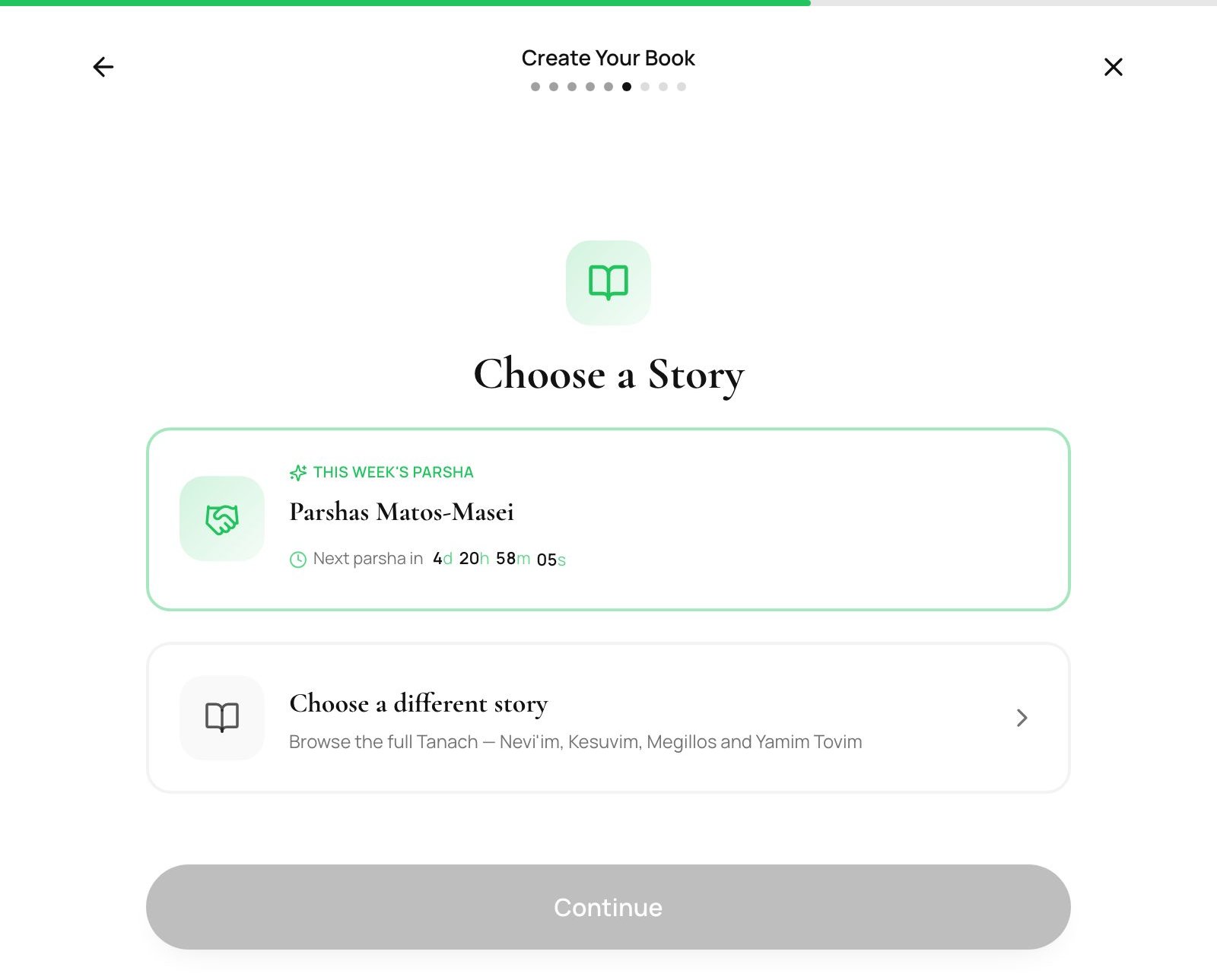
Torah Tale makes personalized Torah storybooks in which the child is the hero. Their name and, from one uploaded photo, their likeness appear on every page, illustrated in 3D animated-film style. Koheles is part of the Kesuvim collection, along with the other Megillos, and you can find it in the Kesuvim category of the story picker.
Every book ends with a dedicated discussion page of 10 questions about the story, mixing comprehension with middos. This turns the book from something read to a child into something talked about at the table. The books are written with careful rabbinical guidance and strict tznius, and reviewed by our team before they go to print.
There are three formats, and the child's age is one of the short ordering questions:
- a 6x6 board book with rounded safety corners, for ages 0-4
- an 8x8 softcover photo book, for ages 4-8
- an 8x8 hardcover photo book, for ages 5-18
Softcover and hardcover books open with a dedication page. If you add parents, grandparents and other relatives with their photos, they appear with the children on a closing family page in every format. An optional matching coloring book (8.5x11, black-and-white line art) can be added for weekday afternoons, erev Shabbos or Chol HaMoed. It is never for Shabbos or Yom Tov. The storybook itself, on the other hand, is a fine thing to read at the Shabbos table or on a long Yom Tov afternoon.

Softcover 8″×8″

Hardcover 8″×8″

Board book 6″×6″

Coloring book 8.5″×11″
Where does Koheles fit with Sukkos and the other Megillos?
Koheles is read on Sukkos, and many see a connection between the temporary sukkah and the sefer's message about what lasts. Its repeated call to simcha also fits the Yom Tov. For more on the Yom Tov itself, see The Sukkos Story for Kids. If your child has already met Megillas Rus or Megillas Esther, Koheles is a quieter Megillah, one that speaks through pictures and sayings rather than events.
When you are ready, it takes about five minutes to create the book: a free account and a few short questions covering each child's name, boy or girl, age and a photo, siblings, the story, your community, the language (English, Hebrew or Yiddish) and the format.
Frequently asked questions
What is Koheles about, in simple words for a child?
Koheles is the teaching of a wise king, whom tradition identifies as Shlomo HaMelech. He looks at the sun, the wind, the rivers and the seasons of life, and teaches that things we chase in this world pass quickly. At the end he tells us what matters most: to fear Hashem and keep His mitzvos.
What does havel havalim mean?
The word havel means a breath or a puff of vapor, something that is here for a moment and then gone. Havel havalim is Koheles's way of saying that the things people chase under the sun do not last on their own. It does not mean that nothing matters, because the Megillah ends by telling us what does matter: yiras Shamayim and mitzvos.
Why do we read Koheles on Sukkos?
Koheles is read on Sukkos, and many connect this to the temporary sukkah, which reminds us that the things of this world are not what we rely on. Koheles also speaks about simcha again and again, which fits the Yom Tov of Zman Simchaseinu. Ask your rav or your family's minhag about exactly when it is read where you daven.
How do I explain Koheles to a 5-year-old?
Keep it to one picture and one sentence. You can say that a very wise king looked at everything in the world and taught that the best things are Torah, mitzvos, good friends and doing what Hashem asks. Then ask your child what they would put in a treasure box that never breaks or gets lost.
What is the lesson of Koheles for children?
The lesson is that what lasts is Torah, mitzvos and good middos, not toys, winning or having the most. Koheles also teaches that there is a right time for everything, that two friends are better than one, that a good name is precious and that we should serve Hashem with simcha. These are all things a child can start living out today.
Can I read a Koheles storybook at the Shabbos table?
Yes, reading a storybook is entirely appropriate on Shabbos and Yom Tov, including on Shabbos Chol HaMoed Sukkos. The discussion page of a Torah Tale book carries 10 questions about the story, mixing comprehension with middos, which gives you something to talk about at the table. Coloring and drawing are melacha, so the optional coloring book is for weekdays only.