Judging Favorably (דן לכף זכות) for Kids: Teaching It at Home
Dan l'chaf zechus means looking for a good explanation before deciding someone meant harm. Here is where the mitzvah comes from, how to explain it to a 4-year-old, a 7-year-old and a 10 to 12-year-old, and what a personalized book on it is like.
Published by Torah Tale.
Create this book for your child
Dan l'chaf zechus, judging favorably, means that when someone does something that looks wrong, we look for a good explanation and assume the best until we know otherwise. Children take to it quickly because they meet the situations every day: the friend who did not say hello, the sibling who grabbed a toy, the classmate who walked past. A child who learns to say 'maybe' before 'how could he?' is already keeping this mitzvah.
What does it mean to judge someone favorably?
The word zechus means merit, and kaf is the pan of a scale. When we judge someone l'chaf zechus, we tip the scale toward the good explanation. We do not decide that the person meant harm when there is another way to understand what happened.
Pirkei Avos (1:6) teaches 'vehevei dan es kol ha'adam l'chaf zechus', judge every person favorably. Chazal also learn the mitzvah from the pasuk 'b'tzedek tishpot amisecha' in Vayikra 19:15, as the Gemara in Shevuos 30a explains. And Hillel teaches in Avos 2:4 not to judge your friend until you reach his place, meaning until you have stood where he stood.
What does judging favorably look like in a child's day?
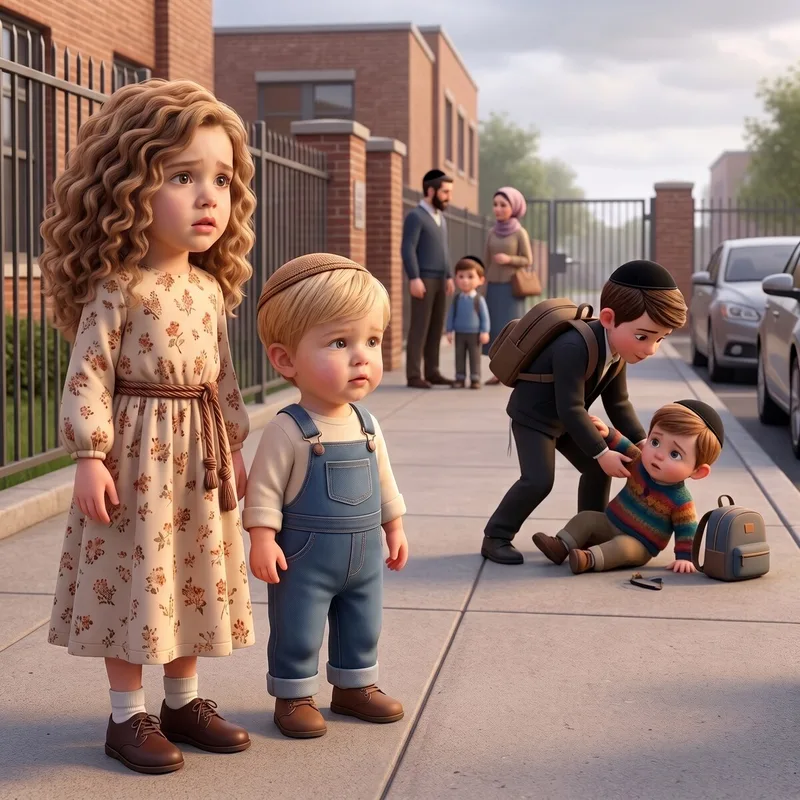
Here are a few ordinary examples, not the plot of any particular book. A child waves to a friend across the playground and gets no wave back. A sibling does not answer a question. A classmate's pencil case was not returned right away.
The first thought is often 'he ignored me on purpose'. Judging favourably adds a second thought: maybe he did not see, maybe he was thinking about something else, maybe he had a hard morning. The child may never learn which was true, and that is fine. The mitzvah is in the choice to think well of the other person.
Is there a story in the Gemara about judging favorably?
Yes. In Maseches Shabbos (127b) the Gemara relates a story of a worker whose employer told him, time after time, that he had nothing with which to pay him. Each time the worker found a favorable explanation. In the end the employer paid him his wages and explained what had held him back, and he said to the worker that just as you judged me favorably, so may Hashem judge you favorably.
The Gemara also states the lesson directly: one who judges his fellow favorably is himself judged favorably. Children respond to this idea, because they too want others to think well of them when they make a mistake.
How do I explain it to a 4-year-old, a 7-year-old and a 10 to 12-year-old?
Age 4: Keep it to a single word. When your child says 'he took my truck!', ask 'Maybe he didn't know it was yours?' Then ask for another 'maybe'. Do this in small daily moments rather than as a lesson.
Age 7: Make it a game of three. 'Can you think of three good reasons he might have done that?' Children this age love coming up with ideas, and the exercise slows down the angry reaction. Praise the pause, not only the final answer.
Ages 10 to 12: Talk about the difference between what a person did and who the person is. Introduce Hillel's words, 'do not judge your friend until you reach his place', and ask what it would take to stand in someone else's place. This is also the age to talk about when a situation is genuinely clear and a child should tell a trusted adult, and to ask your rav about real situations.
Does judging favorably mean ignoring real wrongdoing?
No, and children should hear this clearly. Judging favorably applies when something is unclear and a good explanation is possible. It does not ask a child to stay quiet while being hurt or while someone else is being hurt. Tell your children that if something is really wrong, a parent or teacher needs to know.
Be careful not to turn it into a lecture every time your child complains. Sometimes your child just needs to feel heard first, and the 'maybe' can come a moment later. For the details of when a case is clear and how to handle it, ask your rav.
This mitzvah pairs naturally with the ones about our words. See Guarding My Tongue for Kids and Making Peace with Friends for Kids.
What is the Torah Tale book on judging favorably like?
It comes from the Mitzvos collection, which sets the mitzvos a child keeps in everyday life today. Your child is the hero: their name and, from one uploaded photo, their likeness appear on every page, illustrated in 3D animated-film style. Up to eight siblings can appear in the same book.

Every book ends with a discussion page of 10 questions that mix comprehension with middos, what happened and what it asks of the child. That page turns the book from something read to a child into something talked about at the table. The softcover and hardcover open with a dedication page, and if you add parents and grandparents they appear with the children on a closing family page in every format.
The formats are a 6x6 board book with rounded safety corners for ages 0-4, an 8x8 softcover for ages 4-8, and an 8x8 hardcover for ages 5-18. The book can be ordered in English, Hebrew or Yiddish, and every book is written with careful rabbinical guidance and strict tznius and reviewed by our team before it goes to print.

Softcover 8″×8″

Hardcover 8″×8″

Board book 6″×6″

Coloring book 8.5″×11″
What can we do with it at the table and during the week?
Reading is entirely appropriate on Shabbos, so the Shabbos table is a good place for the story and the discussion questions. Keep it to talking, and try these:
- Think of a time someone did something that looked unkind. What else could have been the reason?
- Has anyone ever judged you favorably when you made a mistake? How did it feel?
- What is the difference between judging favorably and ignoring a problem?
- What is one 'maybe' we can say this week when we feel upset with someone?
On a weekday afternoon or erev Shabbos, the optional matching 8.5x11 coloring book can be added as a one-time extra to a book. Coloring is a weekday activity only, never for Shabbos or Yom Tov.
Creating a book takes about five minutes: a free account and a few short questions covering each child's name, boy or girl, age and one photo, any siblings, the story, your community (asked once), the language and the format. When you are ready, create the book and make your child the hero of a mitzvah they can practice today. You can also read Loving Every Yid for Kids for a related middah.
Frequently asked questions
What does dan l'chaf zechus mean for a child?
It means that when a child sees someone do something that looks unkind or careless, they stop and think of a good reason first. A friend who did not answer may not have heard. A sibling who knocked over the blocks may have tripped. Judging favorably is giving the other person the benefit of the doubt.
Where does the mitzvah of judging favorably come from?
Chazal learn it from the pasuk 'b'tzedek tishpot amisecha' in Vayikra 19:15, as the Gemara in Shevuos 30a explains. Pirkei Avos 1:6 also teaches us to judge every person favorably. In Avos 2:4 Hillel teaches not to judge your friend until you reach his place.
How do I explain judging favorably to a 4-year-old?
Use one word: 'maybe'. When your child complains that someone pushed or ignored them, ask 'Maybe he didn't see you?' and let your child suggest a second 'maybe'. At this age the goal is simply to pause before getting upset, and short, repeated practice in daily moments works better than a long explanation.
Does judging favorably mean pretending nobody ever does anything wrong?
No. Judging favorably is about looking for a good explanation when a situation is unclear. It does not mean ignoring real harm. If a child is being hurt or something is clearly wrong, they should tell a parent or teacher, and for questions about a specific situation you should ask your rav.
What is the Torah Tale book on judging favorably like?
It is a personalized story from the Mitzvos collection, set in everyday life today, in which your child is the hero with their name and likeness illustrated in 3D animated-film style. Like every Torah Tale book, it ends with a discussion page of 10 questions mixing comprehension with middos. It can be ordered in English, Hebrew or Yiddish.
Which format of the book suits which age?
Torah Tale offers a 6x6 board book with rounded safety corners for ages 0-4, an 8x8 softcover for ages 4-8, and an 8x8 hardcover for ages 5-18. A matching 8.5x11 black-and-white coloring book can be added as an optional extra. The child's age is one of the few short questions asked when you create the book.