Traditional Hanukkah Gifts and Why We Give Chanukah Gelt
Chanukah gelt is the oldest of the traditional Hanukkah gifts, and the dreidel is close behind. Here is where the minhag comes from, what gelt means for a child today, why presents became part of the Yom Tov in many homes, and how to keep a gift tied to the day itself in Chanukah 2026.
Published by Torah Tale.
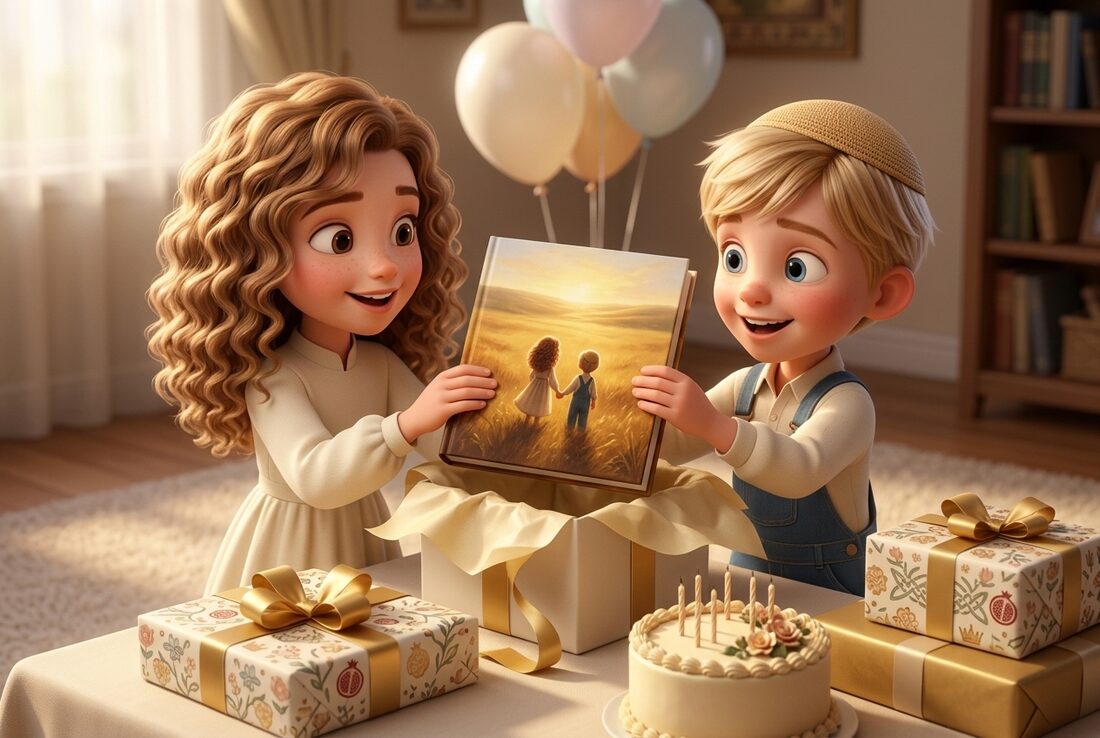
The traditional Hanukkah gifts in a frum home are Chanukah gelt, a dreidel, and something that keeps the child busy with the Yom Tov itself. Gelt is the oldest and most widespread of the three: coins given to children on Chanukah, on one night or on several. Wrapped presents came later in many families, and how they are given varies from home to home. (Hanukkah and Chanukah are two spellings of the same Yom Tov.)
Where does the minhag of Chanukah gelt come from?
Giving gelt is a minhag, not one of the mitzvos of the day. The mitzvos of Chanukah are lighting the licht, saying Hallel and adding Al HaNissim to davening and bentching. Gelt sits alongside them as something Yidden have long done at home with their children.
The explanation most often given connects gelt to Torah learning: money was given to support the melamdim who taught the children, and from there to the children themselves, as encouragement for their learning. The word Chanukah shares a root with chinuch, and the minhag fits that root well. Different communities explain and keep the minhag differently, so follow your family's minhag and your rav.
If you want the story behind the day before you talk about the gifts, we wrote it out for children in The Chanukah Story for Kids.
What does Chanukah gelt mean for a child today?
For a young child, gelt means something simple and powerful: on Chanukah, Totty or Zaidy puts real coins in my hand. It is one of the few things in a child's year that is money given for no reason other than the Yom Tov.
That makes it a good moment for chinuch rather than just a treat. Many families have the child divide the gelt before anything else happens: a portion into the tzedakah box, a portion saved, a portion to spend. A five-year-old can drop one coin in the pushke and understand exactly what he did. A ten-year-old can decide in advance what the tzedakah portion will be.
Gelt also has an old practical use. The coins become the stakes of a dreidel game, which is how a pile of nickels can occupy four children for an hour. Playing for coins on Shabbos raises its own questions, so keep that for the weekday nights or ask your rav.
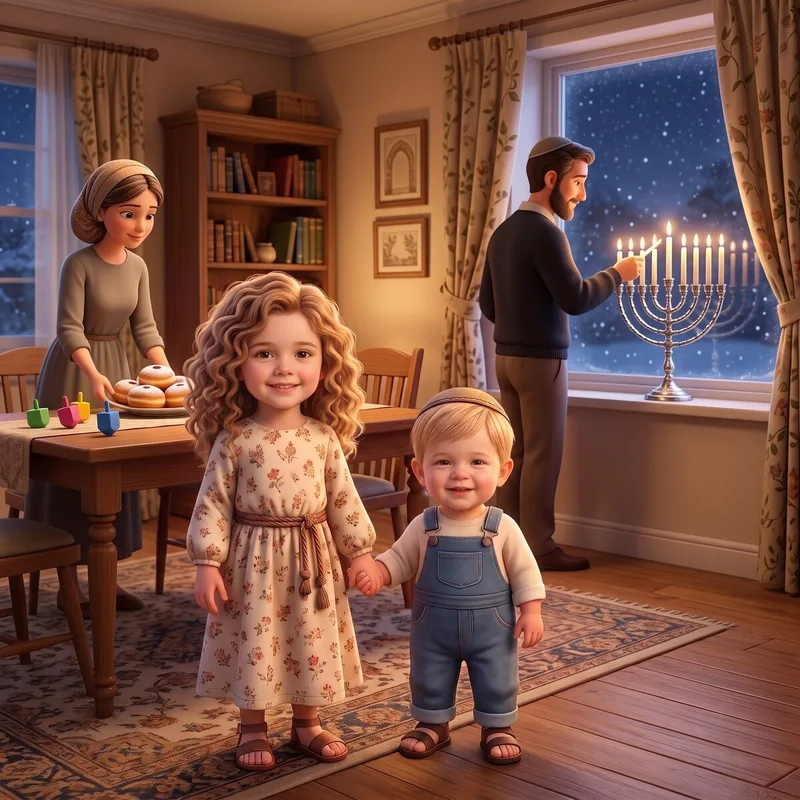
Why do we give gifts on Chanukah at all?
There is no obligation to give presents on Chanukah. A parent who gives gelt and nothing else is keeping the older and more widespread minhag, and does not owe anyone an explanation.
Most families today do give something more, and the question worth asking is not whether to give but what the gift says. A gift tied to the Yom Tov keeps the eight nights pointing in one direction. A gift that has nothing to do with Chanukah tends to take over the room, and by night three the licht are an interruption of the toy rather than the point of the evening.
Gifts that stay tied to the day are not complicated: a menorah the child lights himself when he is old enough, a dreidel, a tzedakah box, a family game for the long winter evenings, or a book about the miracle of Chanukah with the child's own name in it. We laid out a full set of ideas by night in 8 Nights, 8 Meaningful Ideas.
What is the dreidel and why do children play it?
The reason most commonly taught in cheder is that when Torah learning was forbidden, Jewish children learned in secret, and a top was ready on the table so that if soldiers came near it looked like a game. The four letters on the dreidel, nun, gimmel, hey and shin, stand for Nes Gadol Haya Sham, a great miracle happened there. In Eretz Yisrael the fourth letter is a pey, for Nes Gadol Haya Po, a great miracle happened here.
That is why a dreidel is a real Chanukah gift and not a filler. It is a toy that carries the sentence we are trying to get into the child all week.
Chanukah 2026 night by night: which gift fits which night
Chanukah 2026 begins Friday evening, December 4 (25 Kislev 5787), and the calendar this year shapes the giving. The first night is erev Shabbos, so the Chanukah licht are lit before the Shabbos candles, and the eighth night falls on erev Shabbos too. That gives two Shabbosos inside Chanukah and two erev Shabbos lightings. Many women have the minhag not to do melacha while the licht burn; families follow their own minhag and their rav.
| Night | Date | What fits |
|---|---|---|
| 1 | Friday, Dec 4 (erev Shabbos) | Gelt before Shabbos; a book to read over Shabbos |
| 2 | Motzei Shabbos, Dec 5 | Anything with batteries or a screen waits until now |
| 3 | Sunday, Dec 6 | A weekday with a little more time at home for many: dreidel, crafts, a coloring book |
| 4 | Monday, Dec 7 | Something small; a tzedakah box with the first coins inside |
| 5 | Tuesday, Dec 8 | A family game for the rest of the week |
| 6 | Wednesday, Dec 9 | Rosh Chodesh Teves begins; gelt night |
| 7 | Thursday, Dec 10 | The bigger gift, with a full evening to use it |
| 8 | Friday, Dec 11 (erev Shabbos) | Licht before the Shabbos candles; quiet night, then Zos Chanukah on Shabbos, Dec 12 |
On Motzei Shabbos, December 5, communities differ about whether havdalah or the licht come first at home. Follow your shul and your rav. The dates and the full eight-night layout are in Hanukkah 2026: When Chanukah Starts and the 8 Nights.
One reminder that is really a safety reminder: little children do not carry matches, lighters or lit candles. Let a toddler bring the unlit candles to Totty before lighting, and nothing more.
How do I explain gelt and gifts to my child?
Here is what to say, by age.
- Ages 3 to 4: "On Chanukah we give you money, because long ago Yidden gave money so that children could learn Torah. One coin goes in the pushke. The rest is yours."
- Ages 6 to 7: "Chanukah comes from the same word as chinuch, teaching. The Greeks wanted Yidden to stop learning Torah, and the children learned anyway. Gelt is how we say: keep learning, and give some of it away."
- Ages 9 to 12: "Gelt is a minhag, not a mitzvah of the day. The mitzvos are the licht, Hallel and Al HaNissim. So why do we give money? Because the fight was about whether Jewish children would learn Torah, and supporting that learning is how Yidden answered."
Three questions for the Shabbos table on December 5 or December 12: What is the difference between a gift you are owed and a gift you are given? If you could give gelt to anyone, who would you give it to? What did the Chashmonaim do that we are still saying thank you for tonight?
A gift that keeps the eight nights pointing at the miracle
A book about Chanukah itself fits the oldest idea behind the gift: give the child something that belongs to the day. Torah Tale makes personalized Torah storybooks where your child is the hero. From one uploaded photo, their name and their likeness appear on every page, illustrated in high-resolution 3D animated-film style, and up to eight siblings can appear in the same book, ages 0 to 18.
The Chanukah story (חנוכה) is in the Holidays collection in the story picker. Every book ends with a dedicated discussion page of ten questions about the story, mixing comprehension with middos, which is what turns it from something you read to your child into something the family talks about at the table on Shabbos, December 5.

Softcover 8″×8″

Hardcover 8″×8″

Board book 6″×6″

Coloring book 8.5″×11″
There are three formats: a 6"x6" board book with rounded safety corners for ages 0 to 4, an 8"x8" softcover for ages 4 to 8, and an 8"x8" hardcover for ages 5 to 18. Softcover and hardcover open with a dedication page, which is where Bubby and Zaidy can write what the gelt and the book are for. An optional matching 8.5"x11" coloring book in black-and-white line art can be added to the order; coloring is melacha, so keep it for the weekday afternoons of Chanukah or erev Shabbos, never on Shabbos. If you add parents and grandparents with their photos, they appear with the children on a closing family page in every format. Books come in English, Hebrew and Yiddish.
On timing: US standard shipping on a one-time order arrives in about 12 business days, counted from the order, and Thanksgiving on Thursday, November 26, is not a business day. A book meant for the first night, Friday, December 4, should be ordered by about Monday, November 16. A gift for a later night has a few more days, and US express is faster once the book goes to print. We ship worldwide, with rates shown at checkout.
Creating a book takes about five minutes: a free account and a few short questions, each child's name, boy or girl, age and one photo, any siblings, the story, your community (asked once), the language and the format. Ready? Create the book and give a gift that says the same thing the gelt does.
Frequently asked questions
What are the traditional Hanukkah gifts?
The traditional gift of Chanukah is gelt, money given to children, and in many homes a dreidel comes with it. Wrapped presents are a newer addition in many families and are not part of the older minhag. Families today often combine the two: gelt on one or more nights, plus something that keeps the child connected to the Yom Tov, such as a book about the Chanukah story, a menorah of their own, or a tzedakah box.
What does Chanukah gelt mean?
Chanukah gelt means Chanukah money in Yiddish, and it refers to coins given to children during the eight days. A reason commonly given is that the money was connected to children's Torah learning and to supporting the melamdim who taught them, and that a child who receives money learns to give part of it to tzedakah. It is a minhag, not one of the mitzvos of the day, and communities keep it in different ways.
Why do we give gifts on Hanukkah?
There is no mitzvah to give presents on Chanukah. The mitzvos of the day are lighting the licht, saying Hallel and adding Al HaNissim, and the older gift minhag is gelt rather than wrapped presents. Many frum families today do give gifts, and the common approach is to keep them tied to the Yom Tov itself so the present supports the day instead of competing with it.
How much Chanukah gelt do you give a child?
There is no set amount, and practice differs widely from family to family and community to community. Some give coins on one night, some on every night, and some give a larger amount to older children and small coins to the little ones. Ask your own parents what was done in your home growing up, and follow your family's minhag and your rav.
Why do children play dreidel on Chanukah?
The reason most commonly taught in cheder is that when Torah learning was forbidden, children learned in secret and would spin a top if soldiers came near. The four letters nun, gimmel, hey and shin stand for Nes Gadol Haya Sham, a great miracle happened there; in Eretz Yisrael the fourth letter is a pey, for Nes Gadol Haya Po, a great miracle happened here. Playing for coins on Shabbos raises its own questions, so ask your rav.
When should I order a personalized Chanukah book for the first night of Chanukah 2026?
Chanukah 2026 begins on Friday evening, December 4. US standard shipping on a one-time Torah Tale order arrives in about 12 business days counted from the order, and Thanksgiving on Thursday, November 26, is not a business day, so a book meant for the first night should be ordered by about Monday, November 16. A gift intended for a later night has a few more days, and US express is faster once the book goes to print.