Shushan Purim (שושן פורים) for Kids: Why There Is a Day After Purim
Shushan Purim is 15 Adar, the day after Purim. Here is the story behind it, why Yerushalayim keeps Purim that day, and how to explain it to a 4-year-old, a 7-year-old and an 11-year-old.
Published by Torah Tale.
Create this book for your child
Shushan Purim is 15 Adar, the day after Purim, and it is when Purim is observed in cities that were walled in the days of Yehoshua bin Nun, such as Yerushalayim. It is named for Shushan, the capital in the Megillah, where the Yidden gathered one day longer and then rested and celebrated on the 15th. Children connect with it because it starts with a question they often ask themselves: why is there a second day?
Why are there two days of Purim in the Megillah?
The Megillah itself tells us. After Haman's decree was turned around, the Yidden throughout the king's provinces gathered to defend themselves on the 13th of Adar. The pasuk says they rested on the 14th and made it a day of feasting and simcha (Esther 9:17).
In Shushan it went differently. Esther asked the king that the Yidden in Shushan be allowed to act again the next day (Esther 9:13), and they gathered on the 14th as well. The pasuk says they rested on the 15th and made that day their feast (Esther 9:18).
The Megillah also tells us something children can hold onto: the Yidden defended themselves, and the pasuk says "u'vabizah lo shalchu es yadam" (Esther 9:15-16), meaning they did not take the spoil.
Then Mordechai wrote to all the Yidden to keep both the 14th and the 15th of Adar every year (Esther 9:21). That is where the two days come from.
Why does Yerushalayim keep Purim on Shushan Purim?
The Mishnah in Maseches Megillah teaches that a city that was walled in the days of Yehoshua bin Nun reads the Megillah on the 15th. Chazal learn this from Shushan, which was a walled city. Everyone else reads on the 14th.
The Gemara (Megillah 2b) explains that Yehoshua's time was chosen out of kavod for Eretz Yisrael, which was desolate in the days of Purim. In Yerushalayim today, the Megillah, the seudah, mishloach manos and matanos l'evyonim all take place on the 15th.
Some other cities have questions about their status. If you are traveling to Yerushalayim or another such place around Purim, ask your rav which day applies to you.
What do we do on Shushan Purim outside Yerushalayim?
For most of the world, Purim was the day before, and the mitzvos of Purim are not done on the 15th outside walled cities. Customs differ from family to family, and some add a little extra simcha at the table. Ask your rav or follow your family's minhag.
This year, 5787, is a leap year, so Purim falls in Adar II: Tuesday, March 23, 2027, with Shushan Purim on Wednesday, March 24. The Purim of Adar I is a different matter, called Purim Katan, which you can read about in Purim Katan for Kids.
What is the lesson of Shushan Purim for children?
There are a few lessons, each rooted in the Megillah itself.
- Simcha does not have to end quickly. The Yidden in Shushan rested on the 15th and made it a day of joy, and Mordechai asked that the memory be kept.
- Not taking what is not ours. The Yidden defended themselves, and the pasuk tells us they did not take the spoil.
- Thanking Hashem for what happened. Purim is a Yom Tov about Hashem's hidden hand, and a second day of celebration is a way of saying thank you again.
For the full story behind all of this, see The Purim Story for Kids. Esther's fast before she went to the king is in Taanis Esther for Kids.
How do I explain Shushan Purim to a 4-year-old, a 7-year-old and an 11-year-old?
Around 4. Keep it simple: "Purim happened in a city called Shushan. The Yidden there had one more day of simcha, and we remember that." Ask what they would do with one more day of Purim, and sing a Purim song together.
Around 7. Add the question: "How can there be two days?" Explain that most places keep Purim on the 14th, and Shushan, a walled city, kept the 15th. Ask which day Yerushalayim keeps, and let them answer.
Around 11. Talk about the Mishnah's rule for cities walled in the days of Yehoshua bin Nun. Ask why it matters that the rule links Purim to Eretz Yisrael, and what it means that a place can have its own day of simcha. Invite them to look up Esther chapter 9 and find the 13th, 14th and 15th.
What is a personalized Shushan Purim book like?
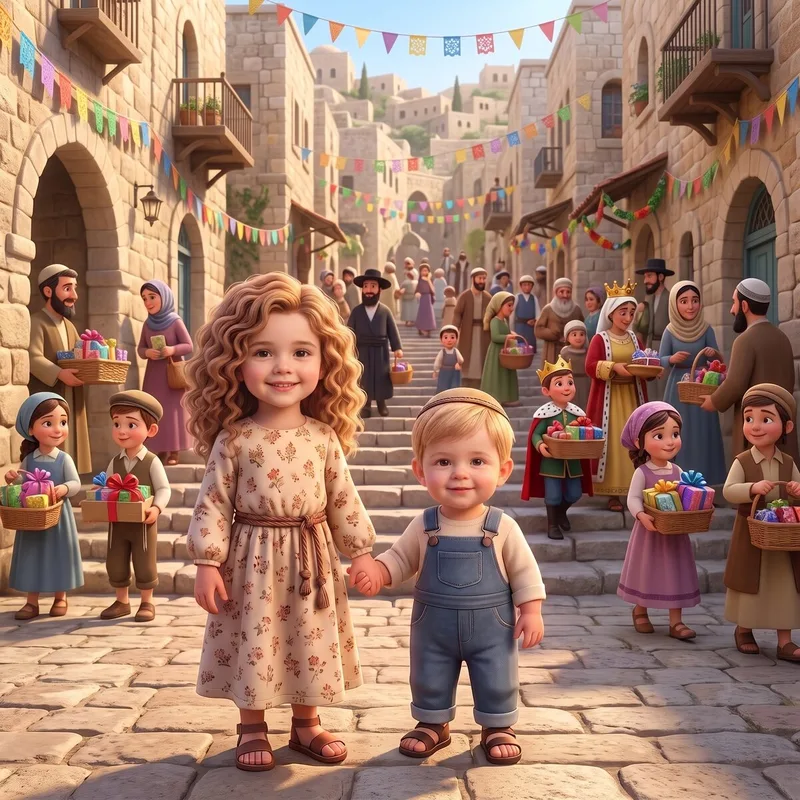
A Torah Tale book makes your child the hero of the story. Their name and, from one uploaded photo, their likeness appear on every page, illustrated in 3D animated-film style. The Shushan Purim book is part of the Holidays collection in the story picker. Every book is written with careful rabbinical guidance and strict tznius, and is reviewed by our team before it goes to print.
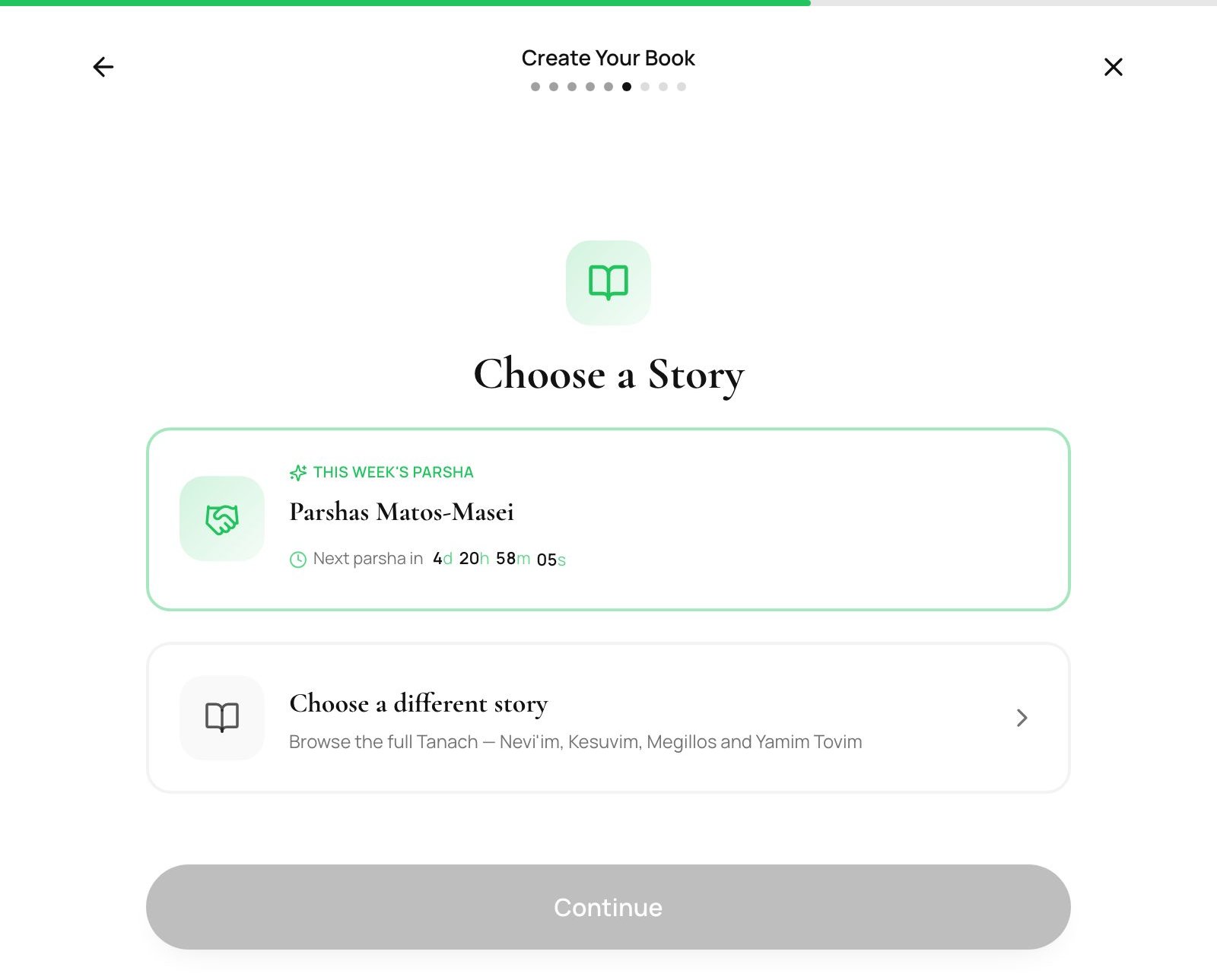
Creating one takes a free account and a few short questions: each child's name, boy or girl, age and one photo, any siblings, the story, your community (asked once), the language and the printed format. Up to eight children, ages 0 to 18, can appear in the same book. Languages are English, Hebrew and Yiddish.
The formats are a softcover photo book 8"x8" (ages 4-8), a hardcover photo book 8"x8" (ages 5-18), and a board book 6"x6" with rounded safety corners (ages 0-4). Softcover and hardcover open with a dedication page. If you add parents, grandparents and other relatives with their photos, they appear with the children on a closing family page in every format.
The storybook itself is wonderful to read on Shabbos or Yom Tov. There is also an optional matching coloring book, 8.5"x11" in black-and-white line art, which is a weekday activity: a good one for a weekday afternoon in the days leading up to Purim.

Softcover 8″×8″

Hardcover 8″×8″

Board book 6″×6″

Coloring book 8.5″×11″
What questions can we ask about Shushan Purim at the table?
Every Torah Tale book ends with a discussion page of ten questions that mix what happened with what it asks of the child. Here are five more you can use at the Purim seudah, or after reading the book together:
- Why do you think Mordechai wrote that the Yidden should keep both days?
- The pasuk says the Yidden did not take the spoil. Why might that matter?
- Which day does Yerushalayim keep Purim, and how do we know?
- What is one way we can make simcha last a little longer, for someone else too?
- How can we thank Hashem for something that happened a while ago?
If you want to say it in one sentence: "Shushan Purim is the day after Purim, the day the Yidden of Shushan rested and celebrated, and the day Yerushalayim keeps Purim."
Purim is still a few months away, so there is time to read about Shushan Purim with your child before Adar. When you are ready, you can create the book in about five minutes.
Frequently asked questions
What is Shushan Purim?
Shushan Purim is 15 Adar, the day after Purim. It is named for Shushan, the capital in the Megillah, where the Yidden gathered one day longer and then rested and celebrated on the 15th. It is the day Purim is kept in cities that were walled in the days of Yehoshua bin Nun, such as Yerushalayim.
Why does Yerushalayim keep Purim on 15 Adar?
The Mishnah in Maseches Megillah teaches that a city walled since the days of Yehoshua bin Nun reads the Megillah on the 15th, following the example of Shushan. Yerushalayim keeps Purim on the 15th. If you are visiting Yerushalayim or another city whose status is in question, ask a rav which day applies to you.
Do we celebrate Shushan Purim outside Yerushalayim?
For most of the world, Purim itself is 14 Adar and the 15th is an ordinary day with a special name. The mitzvos of Purim are not done on that day outside walled cities. Some families add a little extra simcha at the table, but customs vary, so follow your family's minhag or ask your rav.
How do I explain Shushan Purim to a 4-year-old?
Say that Purim happened in a city called Shushan, and the Yidden there had one more day of simcha, the day after everyone else. Keep it to the idea of one more day of happiness and thanking Hashem. Older children can then hear about the walled cities and Yerushalayim.
Is there a personalized Shushan Purim book for children?
Yes. Torah Tale's Holidays collection includes a Shushan Purim book that stars your child, with their name and likeness from one uploaded photo, illustrated in 3D animated-film style. Every book ends with a discussion page of ten questions mixing comprehension with middos.