Mommy and Me (אמא ואני) for Kids: Home, Family & Kibbud Em
A parent's guide to the Mommy and Me story: what it is about, what the Torah says about honoring a mother, questions for the Shabbos table, and how the personalized book works.
Published by Torah Tale.
Create this book for your child
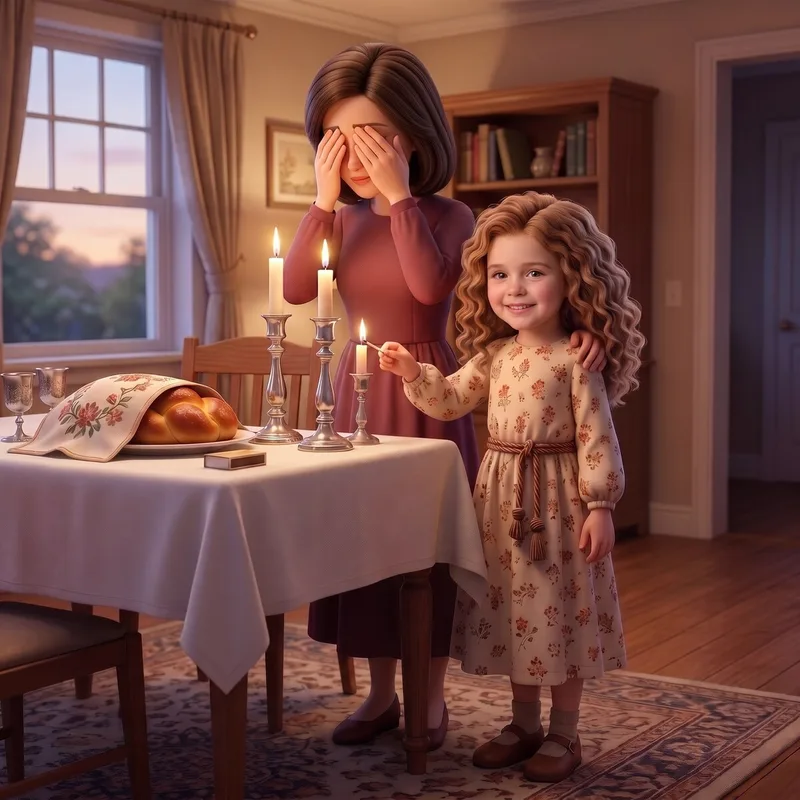
Mommy and Me (אמא ואני) is a Torah Tale story about a child at home with Mommy: the ordinary things they do together, and something a parent teaches along the way. It lands with young children because it is about the person they know best, in the rooms they know best, and it quietly says that Torah is lived at home, in small moments.
What is the Mommy and Me story about?
The story is set at home today, not in the time of the Avos. A child and Mommy spend time together, and a parent teaches something. It is one of our family stories, about a child and the grown-ups who love them: Mommy, Totty, Bubby and Zaidy.
Because it is not a parsha, there is no pasuk to retell and no Rashi or Midrash to sort out. We will not walk through it scene by scene here, because it is best met in the book itself, with your own child on the page. As in every Torah Tale book, the child is the hero: their name and, from one uploaded photo, their likeness appear on every page, illustrated in 3D animated-film style.
What does the Torah say about a child and Mommy?
The Torah speaks to this directly. The Aseres HaDibros say to honor your father and your mother (Shemos 20:12), and in Vayikra 19:3 the Torah says to revere them, with the mother mentioned first. Chazal explain that the order changes between the two places to teach that the Torah wants both parents honored and revered alike.
For a young child, this does not need to be heavy. It starts with noticing Mommy, saying thank you, and listening when she speaks. The halachos of kibbud av va'em have a lot of detail, and a rav or your child's rebbe is the right person for the specifics as your child grows.
Why does learning at home matter so much?
Mishlei 1:8 says: שמע בני מוסר אביך ואל תטש תורת אמך. Listen, my child, to your father's instruction, and do not forsake your mother's teaching. Mishlei 31:26 says of the woman of valor: פיה פתחה בחכמה ותורת חסד על לשונה, she opens her mouth with wisdom, and the Torah of kindness is on her tongue.
These pesukim describe what Mommy and Me is built around. A child's first brachos, first songs and first lessons in kindness usually come in the kitchen, at bedtime and at the table. A story that stars your child in that setting gives those moments a name, and gives your child words for them.
How do I explain Mommy and Me at different ages?
Ages 2 to 3. Keep it to one sentence: this is a story about you and Mommy at home. Point to your child on the page, name what you do together, and say that Hashem gave them a Mommy who loves them. Do not expect questions. Expect to read it again tomorrow.
Ages 4 to 6. Children this age can start connecting the story to their own day. Ask what Mommy did for them today, and what they could do for her. Saying thank you out loud is a real beginning of hakaras hatov and of kibbud em.
Ages 7 to 12. Older children can hear that honoring a parent is a mitzvah from the Aseres HaDibros, not only good manners. Ask what Mommy has taught them that they want to keep, and what they would one day want to teach. This is also a good age to tell them that there are halachos of kibbud av va'em and that a rebbe can teach them.
What can we talk about at the Shabbos table?
Reading is entirely appropriate on Shabbos, and a family story fits the table well. Here are questions that need nothing but talking:
- What do you like to do with Mommy at home?
- What is something Mommy taught you that you still remember?
- How can you say thank you to Mommy without any words?
- What did Totty, Bubby or Zaidy teach you?
- Mommy and Totty, what is something you learned from your own parents?
Letting the grown-ups answer matters. Children listen closely when they hear that their parents had teachers too, and that learning is passed from one generation to the next.
What is the personalized Mommy and Me book like?
You create it in about five minutes at torahtale.com/create. It needs a free account and a few short questions: each child's name, boy or girl, age and one photo, any siblings, the story, your family's community (asked once), the language and the printed format. Up to eight children can appear in the same book, ages 0 to 18, and you can choose English, Hebrew or Yiddish.
For this story, the family page is worth using. You can add Mommy, Totty, Bubby, Zaidy and other relatives with their photos. The story itself stars the children, and the grown-ups you add appear with them on a closing family page, in every format. Softcover and hardcover books also open with a dedication page.
Every book ends with a discussion page of 10 questions, mixing comprehension with middos. It is what turns the book from something read to a child into something talked about together. Every book is written with careful rabbinical guidance and strict tznius, and reviewed by our team before it goes to print.

Softcover 8″×8″

Hardcover 8″×8″

Board book 6″×6″

Coloring book 8.5″×11″
The formats follow age: a 6x6 board book with rounded safety corners for ages 0-4, an 8x8 softcover for ages 4-8, and an 8x8 hardcover for ages 5-18. For grandparents choosing a gift, our gift ideas from Bubby and Zaidy may help, and this step-by-step guide shows the creation flow in detail.
Is there a weekday activity to go with it?
The optional matching coloring book (8.5"x11", black-and-white line art) is a one-time add-on to a book. Coloring is melacha, so it is strictly a weekday activity: an afternoon at home during the week, or a weekday in the days before a Yom Tov. Sit with your child while they color, and ask the same questions as above while their hands are busy.
When you are ready, you can create the book for your child and add the whole family to its closing page.
Frequently asked questions
What is the Mommy and Me story about?
Mommy and Me (אמא ואני) is set at home today. It follows a child and Mommy through what they do together and what a parent teaches. It is a story about family life rather than a retelling of a parsha, and the child reading it is the hero.
What does the Torah say about honoring a mother?
The Aseres HaDibros command us to honor our father and our mother (Shemos 20:12), and Vayikra 19:3 tells us to revere them, mentioning the mother first. Chazal explain that the Torah varies the order to teach that both parents are to be honored and revered alike. For the detailed halachos of kibbud av va'em, ask your rav or your child's rebbe.
How do I explain Mommy and Me to a 3-year-old?
Keep it to a sentence or two and let the pictures do the work: this is a story about you and Mommy at home. Point to your child on the page, name what you do together, and say that Hashem gave them a Mommy who loves them. Toddlers learn through repetition, so reading it again is the point.
Which format of the Mommy and Me book suits which age?
The 6x6 board book with rounded safety corners is for ages 0-4, the 8x8 softcover is for ages 4-8, and the 8x8 hardcover is for ages 5-18. The child's age is one of the few short questions asked when you create the book.
Can Totty, Bubby and Zaidy appear in the book?
Yes. When you create the book you can add parents, grandparents and other relatives with their photos. The story itself stars the children, and the grown-ups you add appear with them on a closing family page, in every format.
Can I read Mommy and Me on Shabbos?
Yes, reading a storybook is entirely appropriate on Shabbos and Yom Tov, and it fits the Shabbos table well. The optional coloring book is different, since coloring is melacha, so keep it for weekday afternoons or erev Shabbos.