Hanukkah Traditions for Families Your Kids Will Remember
Family Chanukah traditions are the few things you do the same way on all eight nights. Here is how to keep the minhagim you grew up with, how to explain them to a 3-year-old and to a 10-year-old, and a few small new habits worth starting in 2026.
Published by Torah Tale.
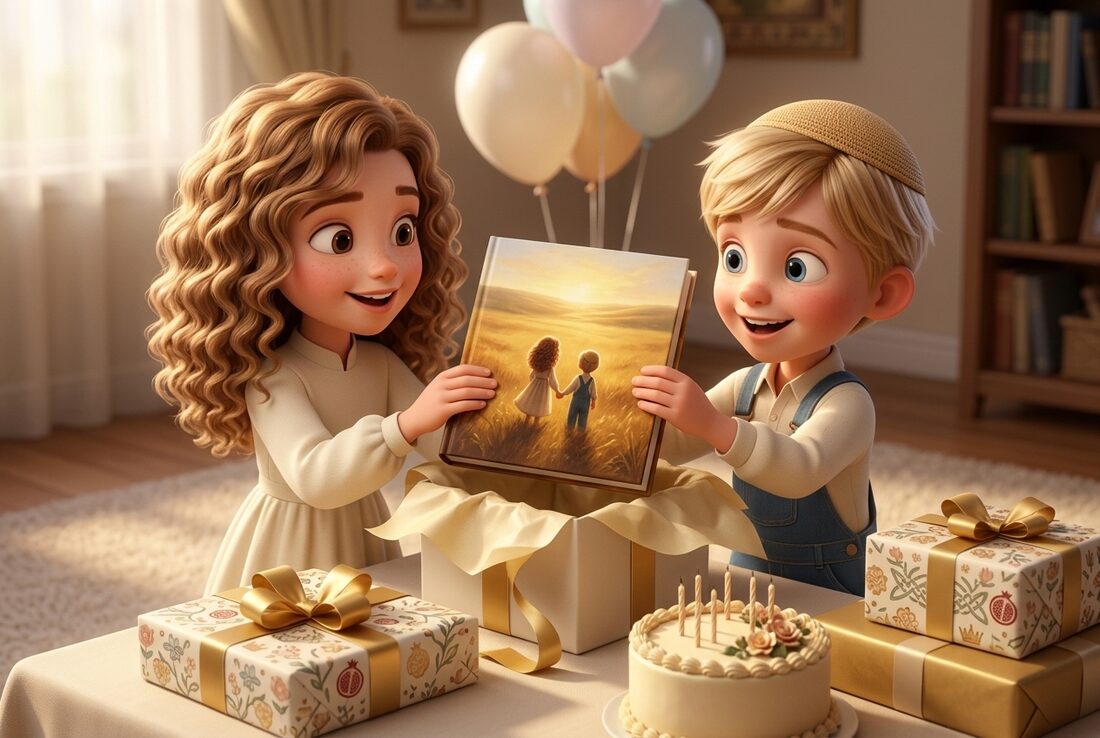
Family Hanukkah traditions are the small number of things your family does the same way on every one of the eight nights: where the menorah stands, who lights and in what order, what is sung afterward, what is eaten, what is given away. (Hanukkah and Chanukah are two spellings of the same Yom Tov.) The traditions children remember are almost never the expensive ones. They are the predictable ones, the ones a child can describe before the first match is struck.
Chanukah 2026 begins on Friday evening, December 4, and runs through Shabbos, December 12, Zos Chanukah. That calendar shapes which traditions fit which night, so it is worth planning once rather than improvising eight times.
What actually counts as a Chanukah tradition?
There are two layers, and it helps to keep them apart when you explain them to children.
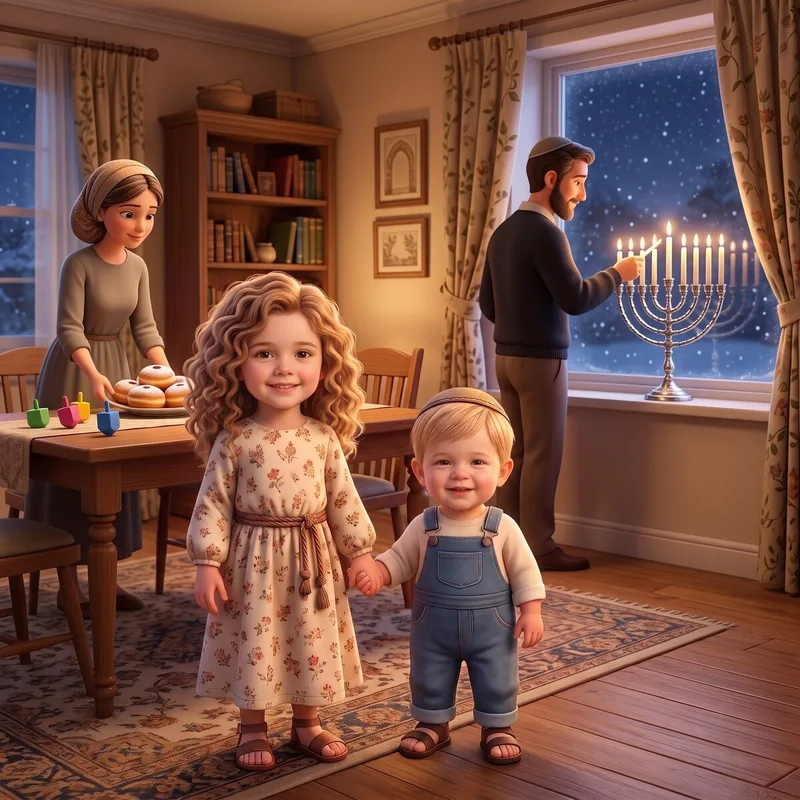
The first layer is the mitzvah and the minhagim that go with it: lighting the licht with the brachos on each of the eight nights, saying Hallel every morning, adding Al HaNissim in davening and in bentching, and placing the menorah where the neis is publicized. These are not family choices. They are what Klal Yisrael does.
The second layer is your family: the song you sing after the licht, the doughnuts Bubby sends, the dreidel game that always ends in an argument about who gets the last nut, the night the cousins come. These are the ones your children will name one day when someone asks what Chanukah was like in their house.
Whose minhagim do we keep, mine or my husband's?
Every year some family discovers on the first night that the two sides do it differently. Communities differ on who lights and how many menoros a household kindles, on whether the menorah stands at the doorway or in a window, on the order of havdalah and the licht on Motzei Shabbos, and on the widely kept practice of women refraining from certain work while the candles burn. Each of these has sources and poskim behind it.
The practical advice is short: ask your rav once, before Chanukah rather than during it, settle the question, and then say out loud to your children that this is our family's minhag. A child who hears that sentence calmly learns something more valuable than the detail itself.
Chanukah 2026 night by night: which tradition fits which night
| Night | Date | What is different | Fits well |
|---|---|---|---|
| 1 | Friday, Dec 4 | Erev Shabbos. Licht are lit before the Shabbos candles. | Everyone home early, story at the menorah, a gift that can be used on Shabbos |
| 2 | Motzei Shabbos, Dec 5 | Havdalah and the licht; follow your family's order | Dreidel, a family game, the toy with batteries |
| 3 | Sunday, Dec 6 | A day with a little more time at home for many families | Guests, cousins, latkes together |
| 4 | Monday, Dec 7 | Ordinary weekday evening | Tzedakah night (below) |
| 5 | Tuesday, Dec 8 | Halfway | Chanukah gelt and counting it |
| 6 | Wednesday, Dec 9 | Rosh Chodesh Teves begins | A short word about Rosh Chodesh at the table |
| 7 | Thursday, Dec 10 | Erev erev Shabbos, baking night | Weekday crafts and coloring, before Shabbos |
| 8 | Friday, Dec 11 | Erev Shabbos again; licht before the Shabbos candles | The fullest menorah, singing, photos taken before Shabbos begins |
Zos Chanukah is Shabbos, December 12. Keep it for talking, singing, stories and a long afternoon with a book. Anything involving coloring, drawing, cutting or batteries belongs to the weekday nights. If you want a plan for those, we wrote up weekday Chanukah crafts and an activity for each night separately. For the two Friday lightings specifically, see Chanukah on Shabbos in 2026.
Three new Chanukah traditions that are small enough to last
A new tradition survives only if it takes under ten minutes and needs nothing bought in advance. Three that work:
- A story at the licht. After the brachos, while the candles are burning, nobody leaves the room and one story is read or told aloud. The same story each year is better than a new one each year; repetition is the point.
- A tzedakah night. Pick one night, say the fourth, when the gift is money the children give rather than receive. Each child decides where their coins go and says it out loud. If you want language for it, teaching the mitzvah of tzedakah to children has the simple version.
- One job per child, every night. The oldest sets out the candles, the middle one opens the siddur to Haneiros Halalu, the youngest brings the unlit candles to Totty before the lighting. Never give a young child matches, a lighter or anything lit.
How do I explain the minhagim to each of my children?
Same menorah, three different explanations.
Ages 3 to 4. Keep it to the oil. The Yevanim did not let the Yidden keep the Torah. Hashem helped a small group of Yidden win. In the Beis HaMikdash they found one small flask of pure oil, enough for one day, and it burned for eight. That is why we light for eight nights. Then let them watch the flames.
Ages 5 to 7. Add the Chashmonaim, the Menorah that was lit in the Beis HaMikdash every day, and the idea that we put our menorah where people can see it so the neis is known. This is the age for asking questions back: why do we add a candle instead of taking one away?
Ages 8 to 12. Now the questions are real ones. Why is there no megillah for Chanukah? Why do we say Hallel on Chanukah and not on Purim? Why is the mitzvah to publicize a story at all? Chanukah is a Yom Tov whose central mitzvah exists to publicize a neis, and an older child can hold that thought. The full retelling is in the Chanukah story for kids, and menorah lighting with kids covers the practical when, where and how many.
How does a book become the tradition?
Of all the new habits families try, the story at the candles is the one that survives, because it costs nothing to repeat. It becomes a tradition when it is the same book, brought out of the same drawer, every Chanukah.
That is where a Torah Tale book fits. The Chanukah story (חנוכה) is in our Holidays collection, and the book stars your own children: their names and, from one uploaded photo, their likeness appear on every page, illustrated in high-resolution 3D animated-film style. Up to eight siblings, ages 0 to 18, can appear in the same book, which means one book read at the menorah rather than one each. If you add parents and grandparents with their photos, they appear with the children on a closing family page, in every format.
Every book ends with a dedicated discussion page of ten questions about the story, mixing comprehension with middos. That page is what turns a Chanukah book into a Chanukah conversation, and it is exactly the right thing to open on Shabbos Zos Chanukah when the afternoon is long.

Softcover 8″×8″

Hardcover 8″×8″

Board book 6″×6″

Coloring book 8.5″×11″
Three formats: a 6"x6" board book with rounded safety corners for ages 0-4, an 8"x8" softcover for ages 4-8, and an 8"x8" hardcover for ages 5-18. Softcover and hardcover open with a dedication page, which is where you write the year, so that in eight years the book itself tells you when the tradition started. There is also an optional matching 8.5"x11" coloring book in black-and-white line art, a weekday add-on for the afternoons before Shabbos, never for Shabbos or Yom Tov itself.
Ordering in time for Chanukah 2026
US standard shipping arrives in about 12 business days, counted from the order, and Thanksgiving, Thursday November 26, is not a business day. A book meant for the first night, Friday December 4, needed to be ordered by around Monday November 16, so that window has closed for standard shipping. A gift for one of the later nights still has a few days, and US express exists and is faster once the book goes to print. We never promise a delivery date.
Creating a book takes about five minutes: a free account and a few short questions, each child's name, boy or girl, age and one photo, any siblings, the story, your community (asked once), the language (English, Hebrew or Yiddish) and the printed format. Every book is written with careful rabbinical guidance and strict tznius and reviewed by our team before it goes to print.
Pick the tradition that takes ten minutes, and keep it for ten years. If the story at the candles is the one you choose, you can create the book with the Chanukah story already selected.
Frequently asked questions
What are the most common Hanukkah traditions in a frum home?
Lighting the menorah with the brachos on each of the eight nights, saying Hallel and adding Al HaNissim in davening and in bentching, playing dreidel, giving Chanukah gelt, and eating foods fried in oil. Alongside those, most families have their own habits: a particular song after the licht, who holds the shamash, which night the cousins come. The first group is the mitzvah and the minhagim that go with it; the second group is what your children will describe when they are grown.
When does Chanukah start in 2026 and how does that affect our traditions?
Chanukah 2026 begins on Friday evening, December 4, which is erev Shabbos, so that night's licht are lit before the Shabbos candles. The eighth night is Friday, December 11, and works the same way, and Zos Chanukah falls on Shabbos, December 12. That means two of the eight nights run on a Friday schedule and two full days are Shabbos, so plan quiet traditions, stories, singing and family meals for those, and leave anything with batteries or crafts for the weekday nights.
How do we choose between my minhagim and my husband's?
This is a question for your rav, not for an article. Communities differ on who lights, where the menorah stands, the order of havdalah and the licht on Motzei Shabbos, and other details, and each practice has its sources. Ask once, decide once, and then teach your children that the answer is your family's minhag, which is itself something worth passing on.
What is a good new Hanukkah tradition to start with young children?
A story at the candles is the easiest one to keep. After the brachos, while the licht are burning, everyone sits by the menorah and one story gets told or read aloud, the same book or the same part of the Chanukah story each year. It needs no preparation, it works on Shabbos as well as on a weeknight, and small children will ask for it by the second night.
How do I explain Chanukah minhagim to a 4-year-old without a long history lesson?
Say less and point more. A 4-year-old needs: the Yevanim did not let the Yidden keep the Torah, Hashem helped a small group of Yidden win, they found one small flask of pure oil in the Beis HaMikdash, and it burned for eight days instead of one. Then show them the licht and say that is why we have eight nights. Older children can handle the Chashmonaim, the Menorah in the Beis HaMikdash and why pirsumei nisa means putting the menorah where people can see it.
Is it a problem to give a Chanukah gift on Shabbos?
Gifts given on the Friday nights of Chanukah 2026 are simplest when the thing itself can be used on Shabbos: a book to read, a family game that does not involve writing or scoring on paper. A toy that needs batteries, or anything that involves coloring, cutting or drawing, is better given on Motzei Shabbos or a weekday night. If you are unsure about a particular item, ask your rav.